
Restocking: Kitchen Convenience Inventory Setup & Food Safety
Module 5: Team, Systems & Operations
Kitchen stock is about control and consistency, not generosity. Guests should find sealed, single-serve essentials fully stocked at every turnover, while bulk backup supplies sit dated and locked away, with a clear point at which you reorder. Following basic food safety rules, such as removing anything a guest has opened and anything past its use-by date, protects both guests and you.
What this lesson covers
- Inventory is control, not generosity
- The restock system we use in every Restocking lesson
- The two formulas
- Your kitchen shopping list (tick as you buy)
- Tea and coffee
- Cooking
- Kitchen rolls
- Milk
- Welcome additions
- Food safety and storage kit (new)
The full lesson is for clients
Clients get every step, the live walkthrough videos and our exact settings and templates from Skye’s Beach House.
Questions people ask
Should I keep food left behind by previous Airbnb guests?
No. Anything a previous guest opened should be thrown out, because you cannot know how it was handled. Only sealed items in their original packaging and within date should be left for the next guest.
Why use sachets instead of shared jars in a holiday rental?
Individually wrapped tea, coffee and sugar stay hygienic between stays and are easy to count and replace. Shared jars can be contaminated and make stock levels harder to track.
What temperature should a holiday rental fridge be?
Australian food safety guidance recommends keeping the fridge at 5°C or colder, which slows the growth of harmful bacteria.
Watch a free lesson
 Free lesson · IntroductionWhy Naming and Identity Shape Guest BehaviourYour Airbnb hosting identity is the name that sits above all your listings, and it becomes your email address. If you might ever own more than one pro…
 Free lesson · IntroductionFree Lesson: Airbnb Arbitrage – What It Is, Why Landlords Resist It & the Margin RealityAirbnb arbitrage means leasing a property long-term at a fixed rent, running it as a short-term rental with the landlord’s written permission, and kee…
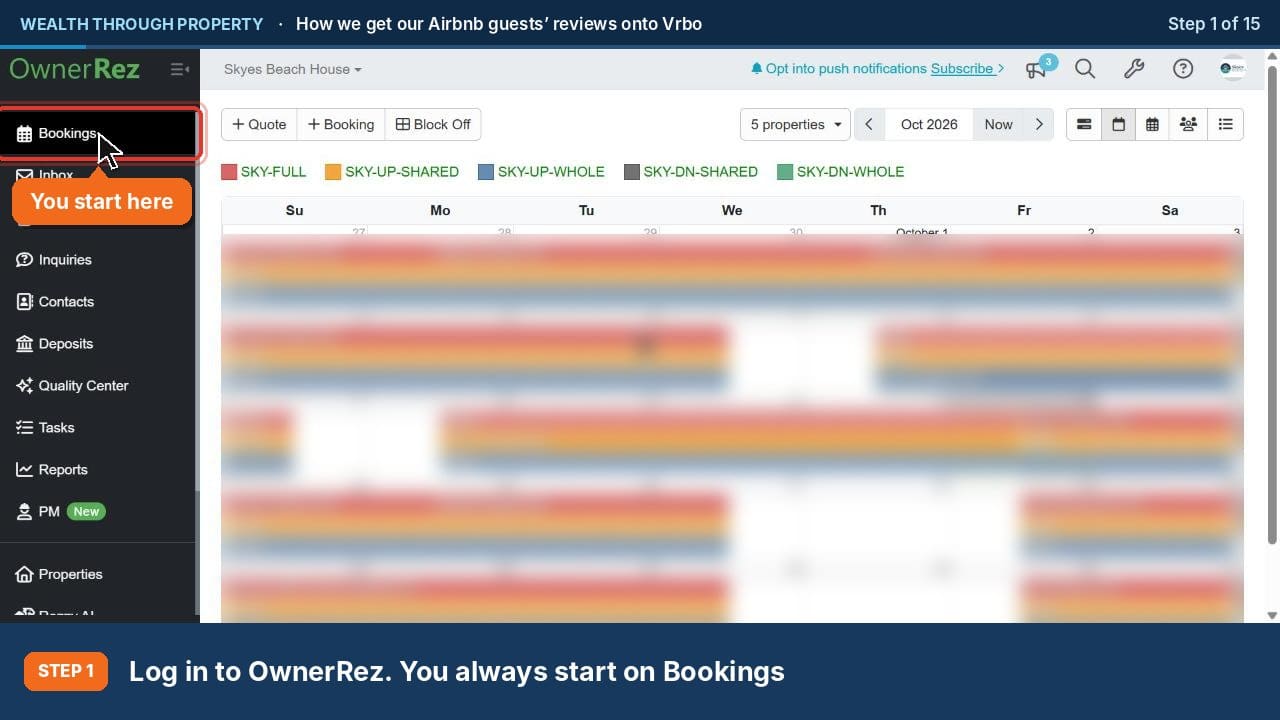 ▶Free lesson · IntroductionFree Lesson: How We Get Our Airbnb Guests’ Reviews onto Vrbo (OwnerRez)Vrbo won’t import your Airbnb reviews, but it does accept reviews that guests leave on your own OwnerRez review form. Ask every Airbnb guest to review…