
Action: Reviews - Making your AI Review Responder
Module 12: Reviews, Reputation & Guest Retention
AI can speed up review replies, but without clear rules it improvises and may exaggerate, sound robotic or even admit fault. A structured approach uses separate AI responders for positive and negative reviews, each working within boundaries you set, such as only referring to what the guest mentioned and stating the specific fix for a complaint. A human should always read and adjust every draft before it is posted.
What this lesson covers
- Why a Structured AI Framework Protects Your Brand
- Your ⭐ Positive Review Response Generator – Structure & Intent
- Your ⚖️ Negative Review Response Generator – Control Under Pressure
- The Human Oversight Rule (Non-Negotiable)
- Closing: From Reaction to Reputation Infrastructure
- Before You Start: What You Need
- Step by Step: Build the Positive Review Generator
- Step by Step: Build the Negative Review Generator
- Step by Step: Test Each Generator
The full lesson is for clients
Clients get every step, the live walkthrough videos and our exact settings and templates from Skye’s Beach House.
Questions people ask
Can I use ChatGPT to reply to Airbnb reviews?
Yes, AI tools can draft review replies, but they work best with clear instructions and should always be checked by the host before posting.
Why use separate AI prompts for positive and negative reviews?
Positive replies act as marketing and should be warm and specific, while negative replies are about risk management and need a calm tone, a real fix and no admission of liability.
What should a review reply never include?
Review replies should never be defensive, blame the guest, share private booking details or admit legal fault, as they are permanent public statements.
Watch a free lesson
 Free lesson · IntroductionWhy Naming and Identity Shape Guest BehaviourYour Airbnb hosting identity is the name that sits above all your listings, and it becomes your email address. If you might ever own more than one pro…
 Free lesson · IntroductionFree Lesson: Airbnb Arbitrage – What It Is, Why Landlords Resist It & the Margin RealityAirbnb arbitrage means leasing a property long-term at a fixed rent, running it as a short-term rental with the landlord’s written permission, and kee…
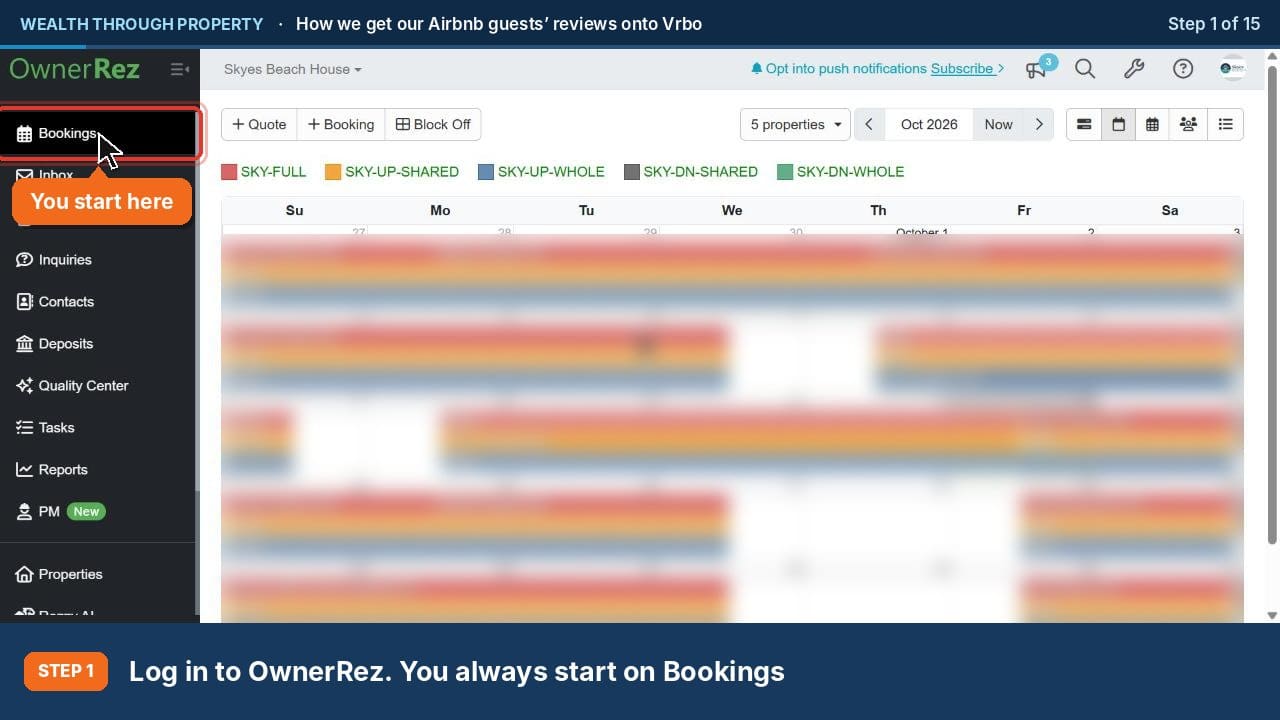 ▶Free lesson · IntroductionFree Lesson: How We Get Our Airbnb Guests’ Reviews onto Vrbo (OwnerRez)Vrbo won’t import your Airbnb reviews, but it does accept reviews that guests leave on your own OwnerRez review form. Ask every Airbnb guest to review…