
Lesson: Handling the Unexpected: Emergency Management for Hosts
Module 5: Team, Systems & Operations
Emergencies are rare but inevitable, and guests judge you on how you respond rather than on the event itself. Sort every incident by urgency, put life safety first with 000 for fire, police or ambulance, keep guests informed calmly, and have a plan ready before you need it. Proper short-stay insurance with public liability matters, because AirCover is not a replacement for insurance.
What this lesson covers
- Why emergencies are different
- What a badly handled emergency really costs
- Incident tiers: how fast to move
- The 3 A’s: Assess, Act, Assist
- The guest emergency plan
- What you do when the guest calls
- Communicating in a crisis
- Who answers at 2 am: after-hours cover
- Set your phone up so it can’t miss the call
- If you have more than one property, or a team
The full lesson is for clients
Clients get every step, the live walkthrough videos and our exact settings and templates from Skye’s Beach House.
Questions people ask
Is Airbnb AirCover the same as insurance?
No. AirCover is a platform protection program with its own conditions and limits, and it does not cover direct bookings. Most hosts also need dedicated short-stay or holiday home insurance with public liability.
What counts as an emergency for an Airbnb host?
Anything that threatens life or safety, such as fire, a gas smell, serious injury or a flood threat, needs an immediate response. Property emergencies like a burst pipe come next, while comfort issues and minor faults can wait for a scheduled fix.
What should I do if guests cannot stay in the property after an emergency?
Move them somewhere safe and comfortable and cover the cost. Deciding in advance where you would send guests at short notice makes this much easier on the night.
Watch a free lesson
 Free lesson · IntroductionWhy Naming and Identity Shape Guest BehaviourYour Airbnb hosting identity is the name that sits above all your listings, and it becomes your email address. If you might ever own more than one pro…
 Free lesson · IntroductionFree Lesson: Airbnb Arbitrage – What It Is, Why Landlords Resist It & the Margin RealityAirbnb arbitrage means leasing a property long-term at a fixed rent, running it as a short-term rental with the landlord’s written permission, and kee…
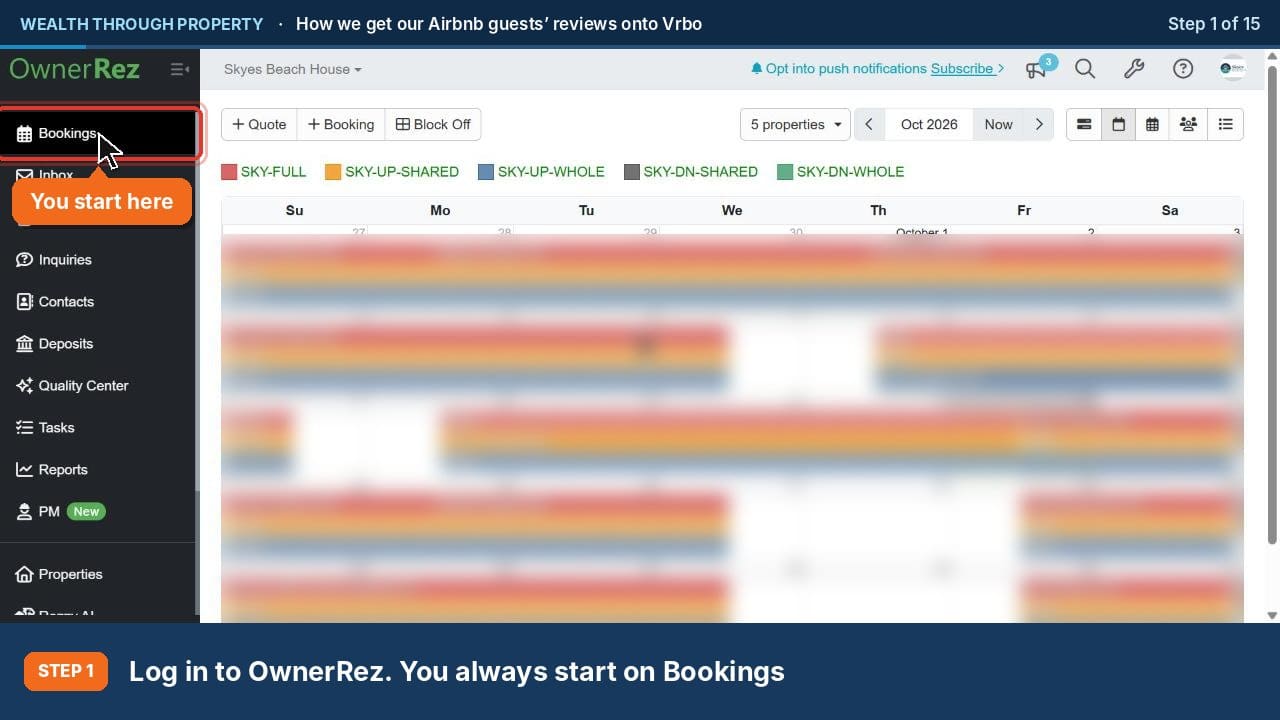 ▶Free lesson · IntroductionFree Lesson: How We Get Our Airbnb Guests’ Reviews onto Vrbo (OwnerRez)Vrbo won’t import your Airbnb reviews, but it does accept reviews that guests leave on your own OwnerRez review form. Ask every Airbnb guest to review…