
Lesson: The Framework to Self-Hosting
Module 5: Team, Systems & Operations
Self-hosting can match a professional manager while keeping the commission, but only with the same framework a professional uses: a channel manager, dynamic pricing, automated messaging, a trained cleaner with a backup, reliable trades and a regular review routine. The biggest advantage is direct guest feedback, which lets you fix issues before the next booking. Without systems and a backup plan, you become the single point of failure.
What this lesson covers
- Why self-hosting pays (with the real numbers)
- The learning advantage: fix it the first time
- The self-host feedback loop: Hear → Act → Improve → Repeat
- Inexperienced, experienced and the host who never grows
- Are you ready to self-host? The readiness check
- The 16-step framework, mapped to this course
- OPTIMISE: your roadmap
- What a self-host’s week really looks like
- Your first 90 days: what to expect
- One booking from start to finish (worked example)
The full lesson is for clients
Clients get every step, the live walkthrough videos and our exact settings and templates from Skye’s Beach House.
Questions people ask
Is it worth self-managing an Airbnb?
It can be, especially if you live nearby and set up proper systems. You keep the management commission and hear guest feedback directly, but you need the time and a backup plan.
What tools do Airbnb self-hosts use?
Common tools include a channel manager such as OwnerRez, dynamic pricing such as PriceLabs, cleaning scheduling such as Turno, a digital guidebook such as Hostfully and noise monitoring such as Minut.
What happens if a self-host gets sick or goes away?
That is the main risk of self-hosting. A trained backup person, a backup cleaner and a second contact for critical trades keep guests looked after when you can't be there.
Watch a free lesson
 Free lesson · IntroductionWhy Naming and Identity Shape Guest BehaviourYour Airbnb hosting identity is the name that sits above all your listings, and it becomes your email address. If you might ever own more than one pro…
 Free lesson · IntroductionFree Lesson: Airbnb Arbitrage – What It Is, Why Landlords Resist It & the Margin RealityAirbnb arbitrage means leasing a property long-term at a fixed rent, running it as a short-term rental with the landlord’s written permission, and kee…
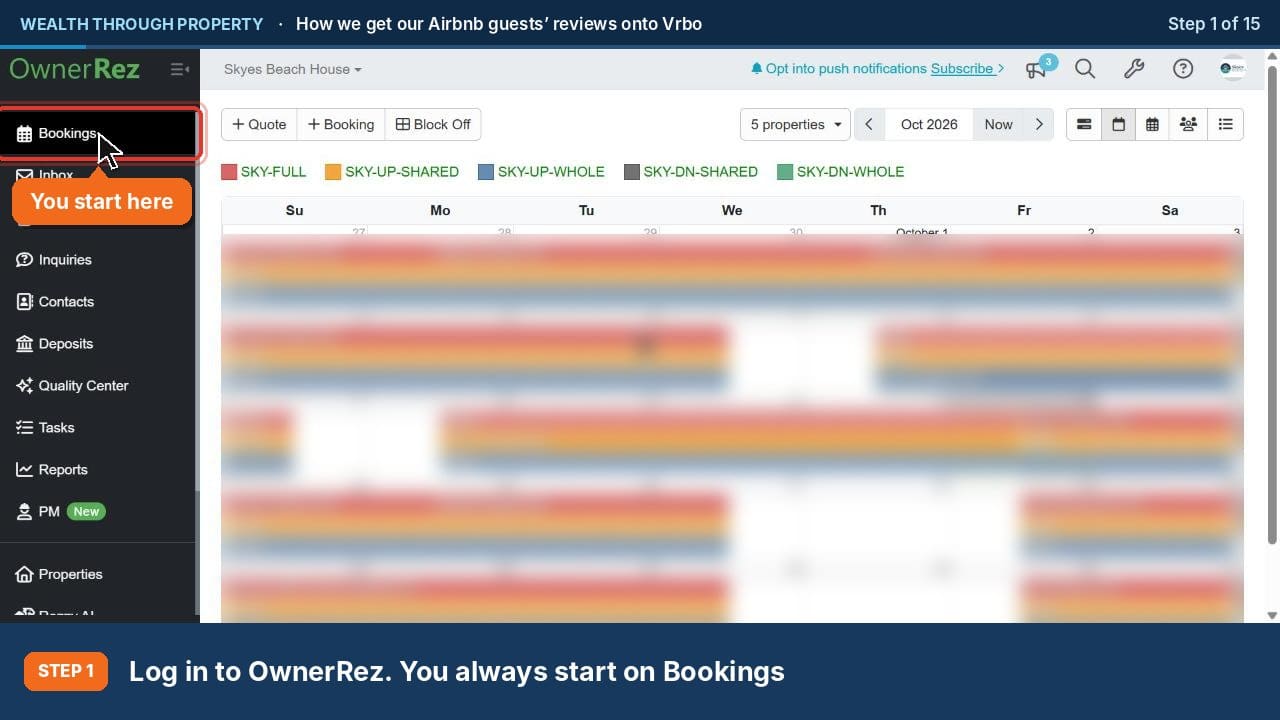 ▶Free lesson · IntroductionFree Lesson: How We Get Our Airbnb Guests’ Reviews onto Vrbo (OwnerRez)Vrbo won’t import your Airbnb reviews, but it does accept reviews that guests leave on your own OwnerRez review form. Ask every Airbnb guest to review…