
Lesson: Arbitrage - The Insurance & Asset Protection Clause for Landlords and Agents
Module 3: Airbnb Arbitrage
Raising insurance before the landlord does turns you from a tenant asking permission into an operator presenting a structured proposal, while silence lets owners imagine the worst. An effective clause acknowledges that protecting the asset comes first, shows the operator's own cover, makes clear who pays for minor damage and excess, and explains how rare catastrophic events are escalated, without ever promising full coverage.
What this lesson covers
- Whoever raises risk first controls the frame
- The four-part structure
- Write and explain the clause
- Walking the landlord and agent through the clause
- How to present it, step by step
- What the agent is reading for
- Common pushback, and how to answer it
- Owner, agent or lawyer: adjust the emphasis
- Questions owners ask about the clause
- Make the clause fit the property, then test it
The full lesson is for clients
Clients get every step, the live walkthrough videos and our exact settings and templates from Skye’s Beach House.
Questions people ask
Should I mention insurance in an Airbnb arbitrage proposal?
Yes, and before the landlord asks. Including it in the offer signals that risk has been planned for, while leaving it out lets the owner fill the gap with worst-case assumptions.
Why shouldn't an operator promise landlords full coverage?
No insurance arrangement covers everything, so promising full coverage overpromises and can create legal exposure. A clear order of who pays and when is more credible.
Who is responsible for structural repairs in Airbnb arbitrage?
Generally the owner, as in a long-term tenancy. Structure, plumbing, wiring and the roof stay with ownership, while guest-caused damage is the operator's responsibility.
Watch a free lesson
 Free lesson · IntroductionWhy Naming and Identity Shape Guest BehaviourYour Airbnb hosting identity is the name that sits above all your listings, and it becomes your email address. If you might ever own more than one pro…
 Free lesson · IntroductionFree Lesson: Airbnb Arbitrage – What It Is, Why Landlords Resist It & the Margin RealityAirbnb arbitrage means leasing a property long-term at a fixed rent, running it as a short-term rental with the landlord’s written permission, and kee…
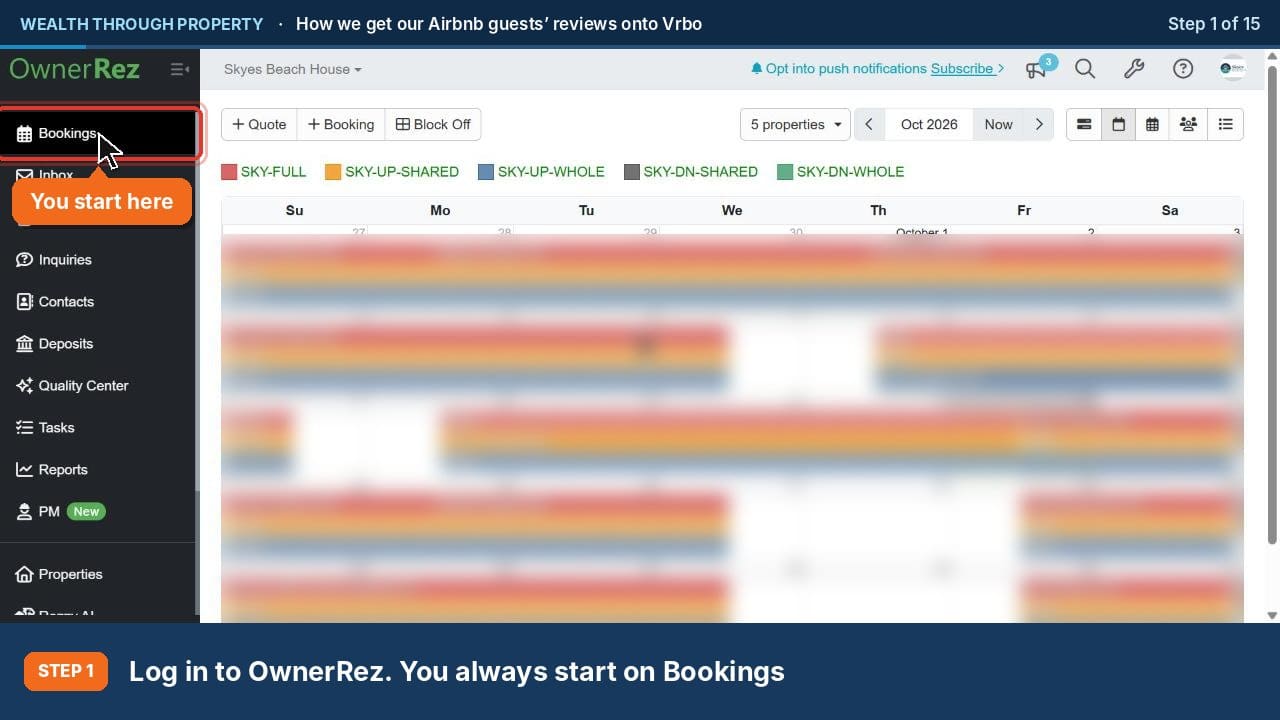 ▶Free lesson · IntroductionFree Lesson: How We Get Our Airbnb Guests’ Reviews onto Vrbo (OwnerRez)Vrbo won’t import your Airbnb reviews, but it does accept reviews that guests leave on your own OwnerRez review form. Ask every Airbnb guest to review…