
Communication 12: OwnerRez - System Message - Optional Security/Damage Deposit
System Messages
For most well-run short-term rentals, a security or damage deposit is not necessary, because it can reduce bookings and make guests feel distrusted while rarely being needed. A deposit works best as a deterrent for properties with higher-risk amenities like spas or pools. If you use one, manage it quietly, only message guests when they must act, and weigh any claim against the cost of a poor review.
What this lesson covers
- OwnerRez Security & Damage Deposits – Messaging, Enforcement, and the Real Cost of Being “Right”
- Why This Matters: Deposits Are a Behavioural Tool, Not a Safety Net
- What a Security or Damage Deposit Actually Does
- Why deposits feel bigger to guests than they are
- Hold, charge, damage protection, waiver: know the difference
- How a deposit hold works behind the scenes
- Holds don’t last forever
- What the guest sees
- Release takes time on the bank’s side
- Our Default Position: Don’t Use a Deposit
The full lesson is for clients
Clients get every step, the live walkthrough videos and our exact settings and templates from Skye’s Beach House.
Questions people ask
Do I need a security deposit for my Airbnb?
Not usually. Clear house rules, good screening and professional operations tend to protect a property better than a deposit, which can deter bookings.
When does a damage deposit make sense for a holiday rental?
Mainly for properties with higher-risk amenities such as spas, hot tubs or pools, where the deposit discourages misuse.
Should I tell guests when their security deposit is released?
Yes. A clear release confirmation closes the stay professionally and prevents follow-up questions about the hold.
Watch a free lesson
 Free lesson · IntroductionWhy Naming and Identity Shape Guest BehaviourYour Airbnb hosting identity is the name that sits above all your listings, and it becomes your email address. If you might ever own more than one pro…
 Free lesson · IntroductionFree Lesson: Airbnb Arbitrage – What It Is, Why Landlords Resist It & the Margin RealityAirbnb arbitrage means leasing a property long-term at a fixed rent, running it as a short-term rental with the landlord’s written permission, and kee…
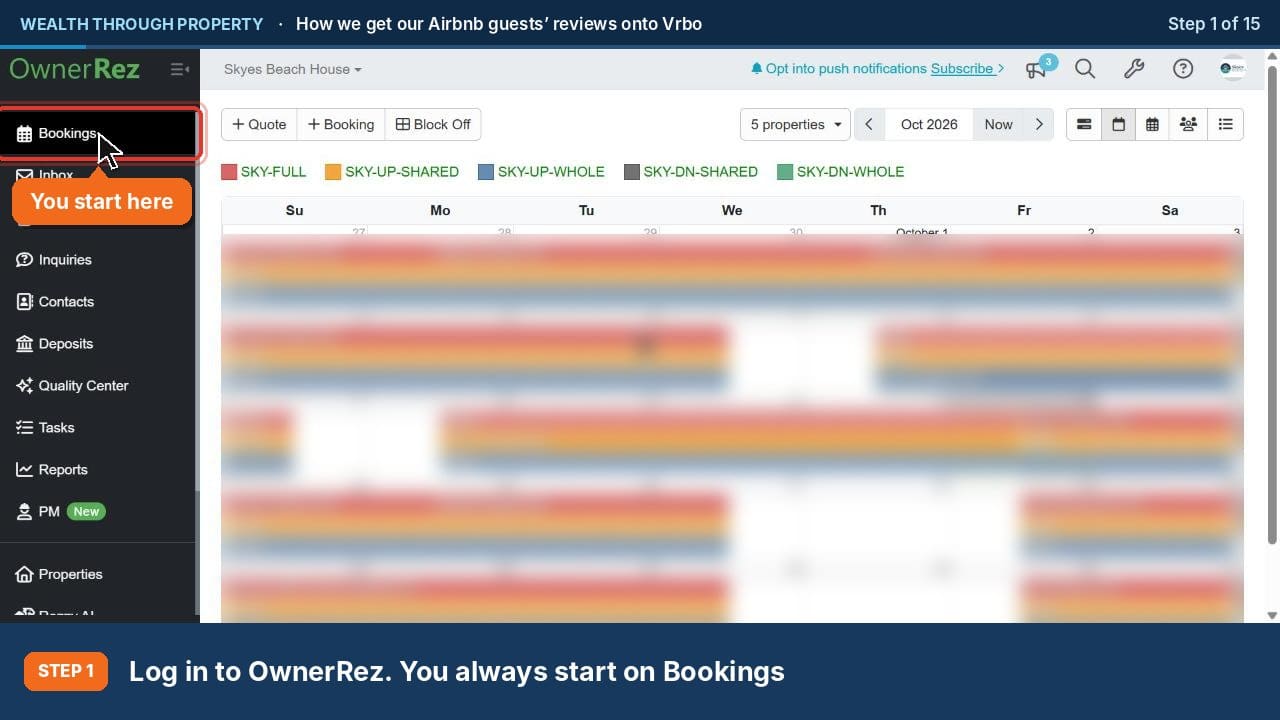 ▶Free lesson · IntroductionFree Lesson: How We Get Our Airbnb Guests’ Reviews onto Vrbo (OwnerRez)Vrbo won’t import your Airbnb reviews, but it does accept reviews that guests leave on your own OwnerRez review form. Ask every Airbnb guest to review…