
Lesson: Sub-Market Deep Dive (Using AirDNA and PriceLabs)
Module 2: Evaluating Opportunities and Markets
Guests book a pocket, not a region, so research the small sub-market a property sits in rather than the whole area. Scarcity matters most: if only a handful of homes truly offer what guests come for, they have pricing power. Averages mislead because part-time listings drag them down, so compare like with like using medians. AirDNA shows past supply and demand, and the PriceLabs Market Dashboard shows the forward-looking view.
What this lesson covers
- What a sub-market is, and why we go micro
- Make scarcity the lens
- Use market data as a map, not a forecast
- The market numbers in plain English
- How averages fool you: a worked example
- How not to be fooled
- Score your pocket: scarcity and the feature stack
- Adjust the weights for your guest type
- AirDNA: open your sub-market
- The Sub-Market Score (0–100)
The full lesson is for clients
Clients get every step, the live walkthrough videos and our exact settings and templates from Skye’s Beach House.
Questions people ask
What is an Airbnb sub-market?
A small area where guests behave the same way, such as a beachfront strip or the streets within walking distance of the main street. Small differences in location can change demand and price a lot.
Are AirDNA market averages reliable?
They are a useful map of the market, not a forecast for your address. Part-time holiday homes and scarce premium homes both skew averages, so filter to comparable full-time listings and look at medians and percentiles.
Can a property do well in a low-scoring market?
Yes. A market score describes the average listing. A property that is scarce in its pocket, offers something guests can't find elsewhere and is well optimised can outperform a weak market.
Watch a free lesson
 Free lesson · IntroductionWhy Naming and Identity Shape Guest BehaviourYour Airbnb hosting identity is the name that sits above all your listings, and it becomes your email address. If you might ever own more than one pro…
 Free lesson · IntroductionFree Lesson: Airbnb Arbitrage – What It Is, Why Landlords Resist It & the Margin RealityAirbnb arbitrage means leasing a property long-term at a fixed rent, running it as a short-term rental with the landlord’s written permission, and kee…
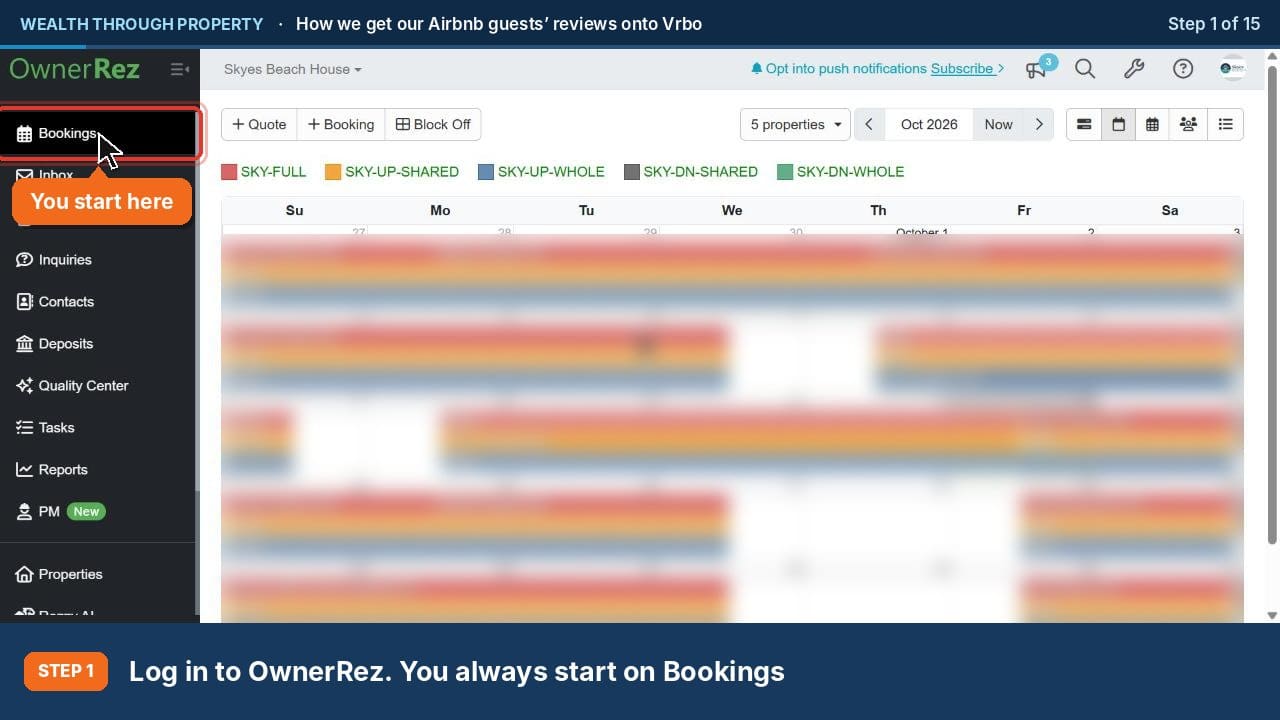 ▶Free lesson · IntroductionFree Lesson: How We Get Our Airbnb Guests’ Reviews onto Vrbo (OwnerRez)Vrbo won’t import your Airbnb reviews, but it does accept reviews that guests leave on your own OwnerRez review form. Ask every Airbnb guest to review…