
Lesson: House Rules as a System: Structure, Enforcement, and Guest Alignment
Module 9: The Digital House Guide
Airbnb house rules work best as a system, not a platform formality. They are the one place boundaries, property realities and consequences belong, which lets your listing description stay warm and inviting. Rules are written for the guests who push limits, so detail is fine, the tone should be firm but never hostile, and getting guests to agree upfront makes later enforcement far less confrontational.
What this lesson covers
- Opening: Why House Rules Matter More Than Most Hosts Realise
- The Core Purpose of House Rules (Beyond Platform Compliance)
- The Occasion: Where Expectations and Boundaries Belong
- Beyond Basic Instructions: Why “Can and Can’t” Is an Incomplete View
- Guest Psychology: How Structure Changes Behaviour
- Who House Rules Are Actually Written For
- Pre‑Commitment and Accountability
- Operational Reality: Why Rules Prevent Conflict Instead of Creating It
- Why Long House Rules Work (And Why Length Is Not the Enemy)
- The Occasion: Managing Expectations at the Commitment Stage
The full lesson is for clients
Clients get every step, the live walkthrough videos and our exact settings and templates from Skye’s Beach House.
Questions people ask
Are long Airbnb house rules a bad idea?
Not necessarily. Detailed rules signal a well-run property, and the more high-value amenities a home has, the more detail is needed to protect them.
Should house rules go in the Airbnb listing description?
Generally no. The description's job is to sell the stay, so boundaries and consequences sit better in the house rules, where guests expect them.
Should every short-term rental charge a security deposit?
Not by default. A deposit can deter bookings, so it is best used where misuse is a real risk and the triggers for a deduction are clearly explained.
Watch a free lesson
 Free lesson · IntroductionWhy Naming and Identity Shape Guest BehaviourYour Airbnb hosting identity is the name that sits above all your listings, and it becomes your email address. If you might ever own more than one pro…
 Free lesson · IntroductionFree Lesson: Airbnb Arbitrage – What It Is, Why Landlords Resist It & the Margin RealityAirbnb arbitrage means leasing a property long-term at a fixed rent, running it as a short-term rental with the landlord’s written permission, and kee…
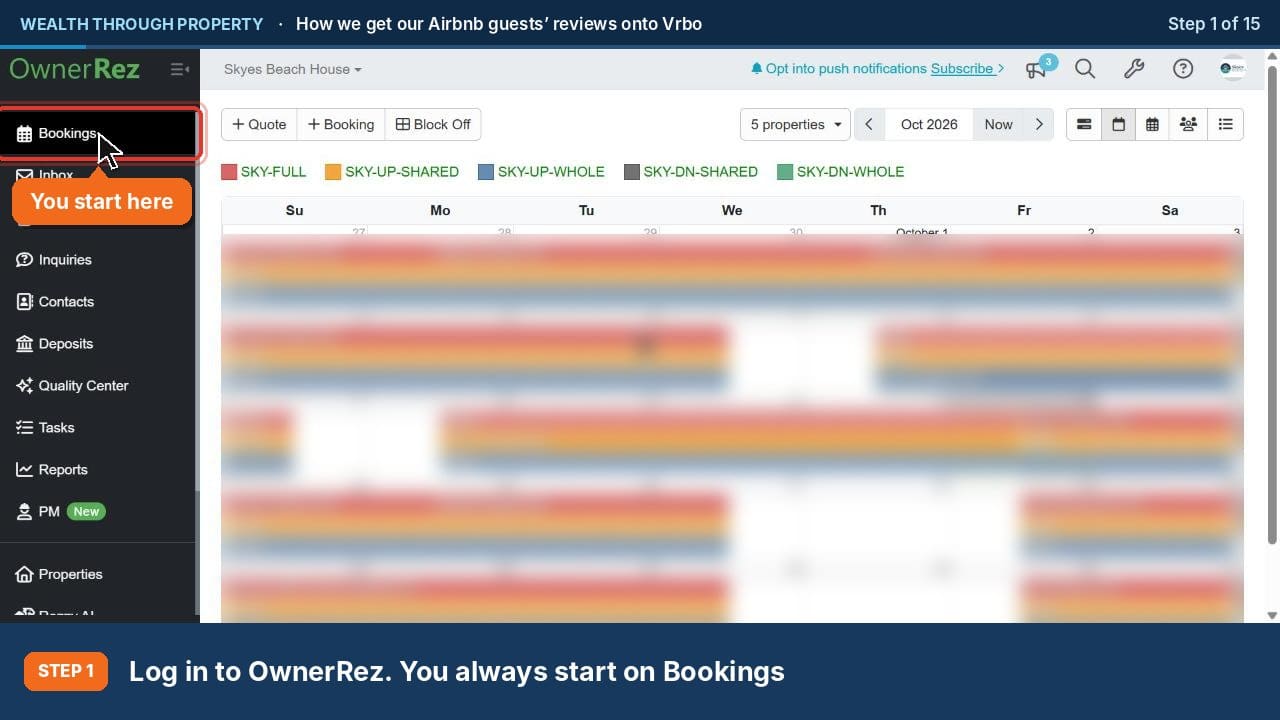 ▶Free lesson · IntroductionFree Lesson: How We Get Our Airbnb Guests’ Reviews onto Vrbo (OwnerRez)Vrbo won’t import your Airbnb reviews, but it does accept reviews that guests leave on your own OwnerRez review form. Ask every Airbnb guest to review…