
Lesson: Arbitrage - Defining Your Property Brief (The Eight Drivers)
Module 3: Airbnb Arbitrage
In arbitrage, the factors that make an Airbnb perform are the same as when you own, but there is no capital growth to rescue a poor choice. The eight drivers are amenity demand, proximity, visual anchors, emotional experience, engagement features, functional alignment, friction and convenience. Scoring every property against them objectively, before emotion takes over, protects both the operator and the landlord.
What this lesson covers
- The drivers don’t change. The risk does
- The eight drivers
- How to check each driver before you commit
- Score a property
- Scoring three very different properties
- What the examples teach
- Lifestyle or necessity demand: what changes in your assessment
- Driver Scorecard and A/B/C wording
- Scoring a property like Skye’s Beach House
- From desk check to site visit: a 20-minute routine
The full lesson is for clients
Clients get every step, the live walkthrough videos and our exact settings and templates from Skye’s Beach House.
Questions people ask
Why is property selection more important in Airbnb arbitrage?
Because rent is due every month regardless of bookings and there is no capital growth to offset a weak year. Any underperformance comes straight out of the operator's pocket.
What makes a property's layout suit short-term rental?
Good proportions, natural light and a logical flow from entry to living to bedrooms, with enough bathrooms and dining space for the guest count. Furniture can improve a space but can't fix a layout that works against guests.
Should I choose an Airbnb area based on how nice the suburb is?
Not on its own. The first question is why guests travel there at all, such as a beach, nature or a hospital. A pleasant residential suburb with no clear travel driver is a weak short-term rental location.
Watch a free lesson
 Free lesson · IntroductionWhy Naming and Identity Shape Guest BehaviourYour Airbnb hosting identity is the name that sits above all your listings, and it becomes your email address. If you might ever own more than one pro…
 Free lesson · IntroductionFree Lesson: Airbnb Arbitrage – What It Is, Why Landlords Resist It & the Margin RealityAirbnb arbitrage means leasing a property long-term at a fixed rent, running it as a short-term rental with the landlord’s written permission, and kee…
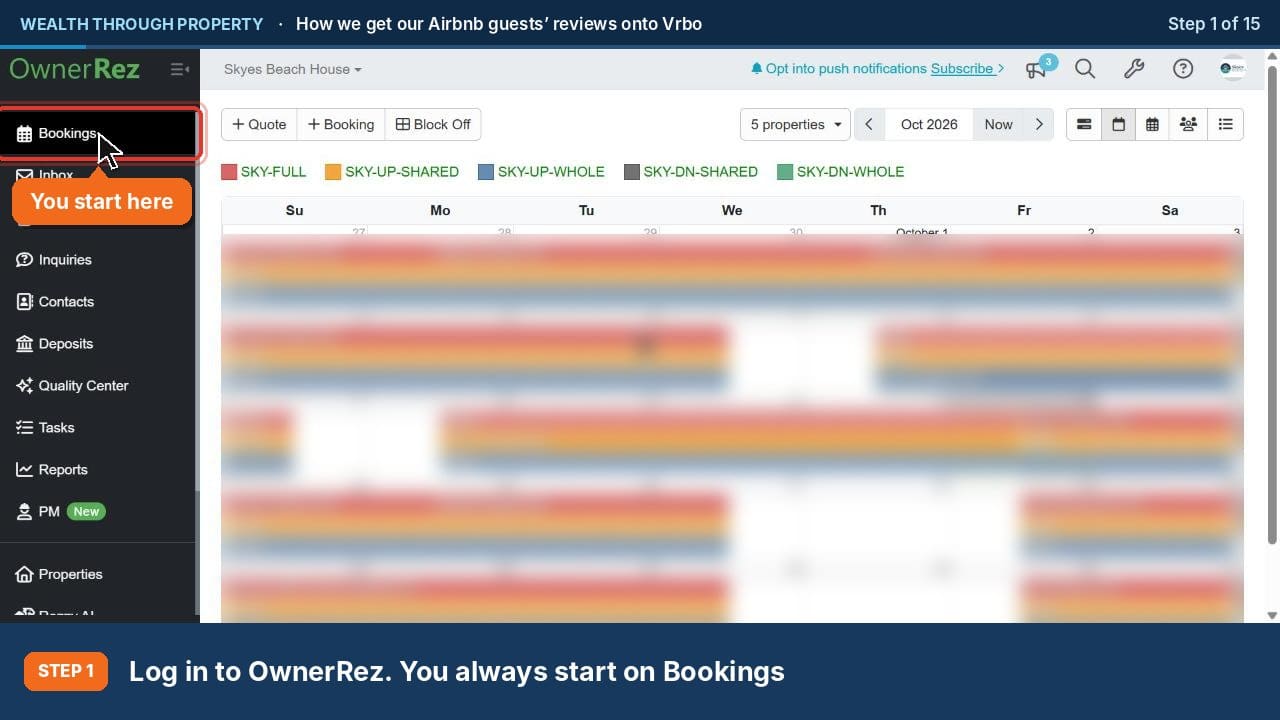 ▶Free lesson · IntroductionFree Lesson: How We Get Our Airbnb Guests’ Reviews onto Vrbo (OwnerRez)Vrbo won’t import your Airbnb reviews, but it does accept reviews that guests leave on your own OwnerRez review form. Ask every Airbnb guest to review…