
Action: OwnerRez - Adding Damage Deposit Fee to platforms or Direct Bookings.
Module 6: OwnerRez - Setting up the Channel Manager
How a damage fee is structured matters more than its size. A large, prominent charge can become a booking objection, and framing it as insurance can make guests feel minor damage is already covered. A small damage waiver set up as an OwnerRez surcharge on direct and other non-OTA bookings protects you where exposure is highest, while Airbnb, Booking.com and Vrbo keep their own protections and pricing.
What this lesson covers
- Action Lesson: Adding a Small Damage Protection Amount (Without Creating Guest Objections)
- Why This Matters
- Deposit, Protection or Waiver? Three Different Things
- The Psychology of Fees and Guest Behaviour
- Our Preferred Structure
- Why We Avoid Calling This “Damage Insurance” to Guests
- How the Idea Fits the Setup
- Important: Where This Amount Is Applied (And Where It Is Not)
- Why a Channel-Specific Approach Matters
- Platform by Platform
The full lesson is for clients
Clients get every step, the live walkthrough videos and our exact settings and templates from Skye’s Beach House.
Questions people ask
Should I add a damage fee to Airbnb bookings?
Generally not through your channel manager. Airbnb, Booking.com and Vrbo have their own pricing structures and guest protections, so a small damage fee is usually best kept to direct bookings.
Why do direct bookings need extra damage protection?
On direct bookings there is no platform to mediate disputes or absorb risk, so a small damage waiver gives you a buffer without relying on your insurance.
Do fees on direct bookings need to be shown upfront in Australia?
Compulsory fees should be included in the price guests see, because Australian Consumer Law prohibits hiding unavoidable charges. Any optional fee should be clearly presented as optional.
Watch a free lesson
 Free lesson · IntroductionWhy Naming and Identity Shape Guest BehaviourYour Airbnb hosting identity is the name that sits above all your listings, and it becomes your email address. If you might ever own more than one pro…
 Free lesson · IntroductionFree Lesson: Airbnb Arbitrage – What It Is, Why Landlords Resist It & the Margin RealityAirbnb arbitrage means leasing a property long-term at a fixed rent, running it as a short-term rental with the landlord’s written permission, and kee…
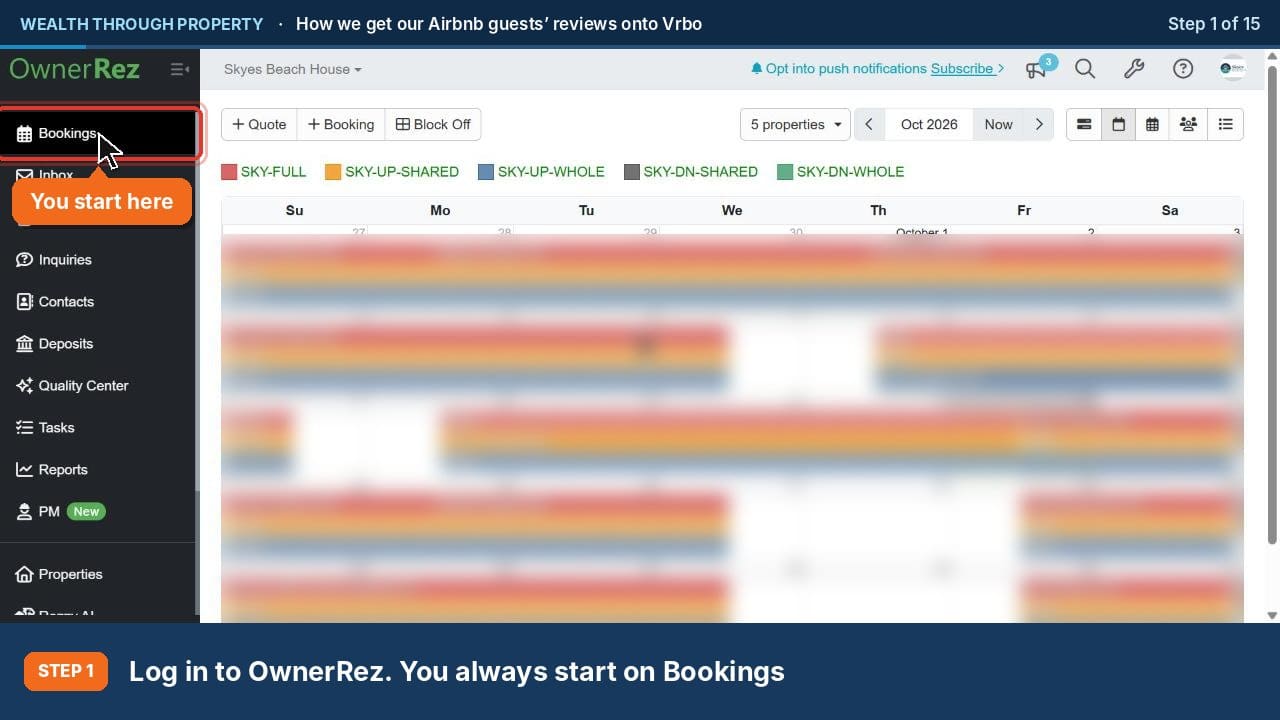 ▶Free lesson · IntroductionFree Lesson: How We Get Our Airbnb Guests’ Reviews onto Vrbo (OwnerRez)Vrbo won’t import your Airbnb reviews, but it does accept reviews that guests leave on your own OwnerRez review form. Ask every Airbnb guest to review…