
Lesson: Arbitrage - Your Proposal Pack: Positioning & the Master Template
Module 3: Airbnb Arbitrage
A strong arbitrage proposal focuses on what the landlord won't lose rather than what the operator will gain, because people feel losses more than equal gains. It introduces a structured business first, explains how the arrangement works, then covers owner benefits, proof and terms, and answers every risk in writing. Neutral, accurate wording helps, but the model should always be described transparently.
What this lesson covers
- A casual message triggers fear
- Stop calling it “arbitrage” (but never hide it)
- Two proposal types and a business identity
- Your business name does the first five seconds of work
- Who reads your pack, and what each reader checks
- General or property-specific: which one do you send?
- Build the pack in the right order
- Writing each section so it lands
- Six writing rules for every page
- The master proposal
The full lesson is for clients
Clients get every step, the live walkthrough videos and our exact settings and templates from Skye’s Beach House.
Questions people ask
Should I call it rental arbitrage when approaching a landlord?
The term can sound speculative to owners, so many operators describe it in more neutral leasing language. The model should still be explained honestly, including that it is sometimes called rental arbitrage.
What is the difference between a general and a property-specific arbitrage proposal?
A general proposal introduces your business to an agency so agents bring you suitable properties. A property-specific proposal makes a tailored case for one address.
Why does a business name matter in an arbitrage proposal?
Owners tend to judge individuals on personality but businesses on structure, and structure feels safer. A neutral, hospitality-focused name with business contact details makes the proposal look professional from the first line.
Watch a free lesson
 Free lesson · IntroductionWhy Naming and Identity Shape Guest BehaviourYour Airbnb hosting identity is the name that sits above all your listings, and it becomes your email address. If you might ever own more than one pro…
 Free lesson · IntroductionFree Lesson: Airbnb Arbitrage – What It Is, Why Landlords Resist It & the Margin RealityAirbnb arbitrage means leasing a property long-term at a fixed rent, running it as a short-term rental with the landlord’s written permission, and kee…
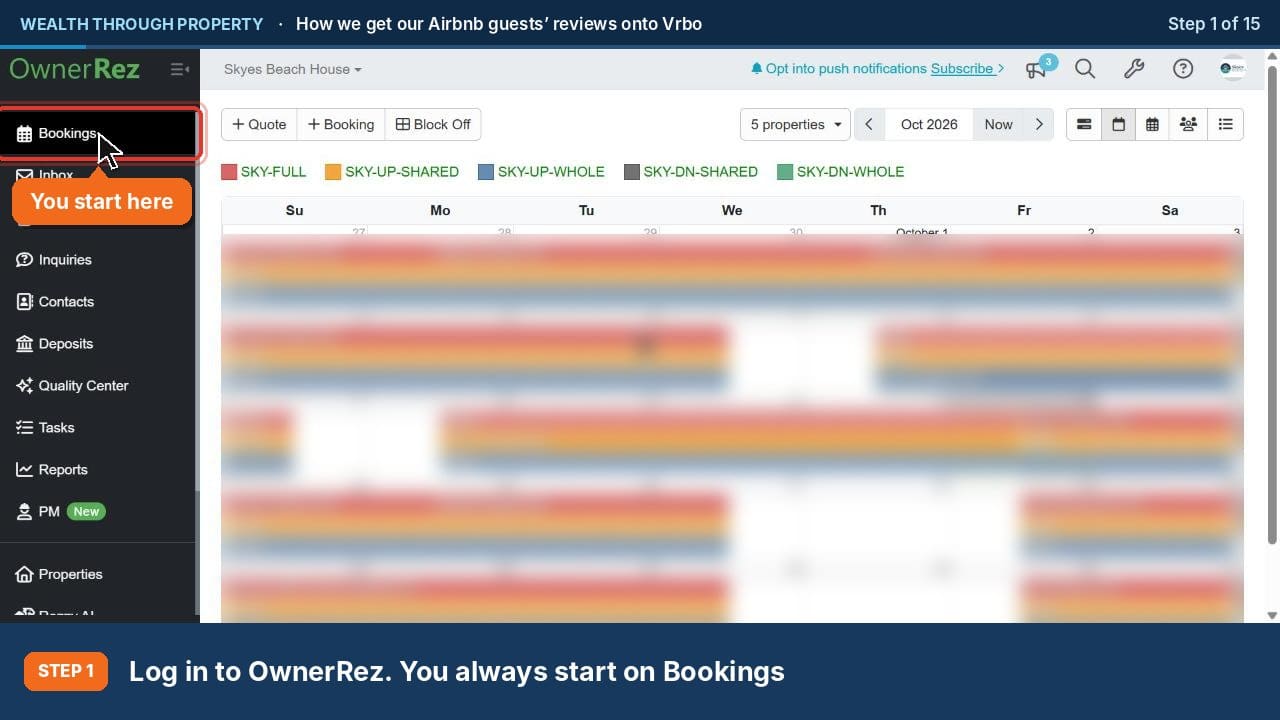 ▶Free lesson · IntroductionFree Lesson: How We Get Our Airbnb Guests’ Reviews onto Vrbo (OwnerRez)Vrbo won’t import your Airbnb reviews, but it does accept reviews that guests leave on your own OwnerRez review form. Ask every Airbnb guest to review…