
Lesson: The Weight of Negatives in Airbnb Hosting
Module 1: Sales Funnel & Introduction into Psychology
Guests don't add up a stay like an accountant; they weigh disappointments more heavily. Negativity bias and loss aversion mean one early flaw, such as a smeared glass door, can switch on suspicion and make every later imperfection more noticeable. Arrival and check-out carry the most weight, so removing negatives does more for reviews than adding extras.
What this lesson covers
- Why Negatives Hit Harder Than Positives
- Negativity bias
- Loss aversion
- The Domino Effect: How One Flaw Becomes Ten
- What Negatives Really Cost You
- Your rating is an average, and averages are fragile
- Why one negative costs more than one booking
- The Timeline of Negatives in a Stay
- Before arrival: first contact
- Arrival: the first five minutes
The full lesson is for clients
Clients get every step, the live walkthrough videos and our exact settings and templates from Skye’s Beach House.
Questions people ask
What is negativity bias in hospitality?
It is the tendency for bad experiences to affect people more strongly than good ones of the same size. For hosts, it means one visible flaw can outweigh several thoughtful extras.
Can welcome gifts make up for a cleanliness problem?
Generally no. Extras feel like a bonus, while a cleanliness issue reads as a sign of risk, so it tends to dominate how the stay is remembered and reviewed.
How should an Airbnb host handle a drawback they can't fix?
Disclose it plainly in the listing with useful context. A drawback guests knew about before booking feels like a choice, while one discovered on arrival feels like a broken promise.
Watch a free lesson
 Free lesson · IntroductionWhy Naming and Identity Shape Guest BehaviourYour Airbnb hosting identity is the name that sits above all your listings, and it becomes your email address. If you might ever own more than one pro…
 Free lesson · IntroductionFree Lesson: Airbnb Arbitrage – What It Is, Why Landlords Resist It & the Margin RealityAirbnb arbitrage means leasing a property long-term at a fixed rent, running it as a short-term rental with the landlord’s written permission, and kee…
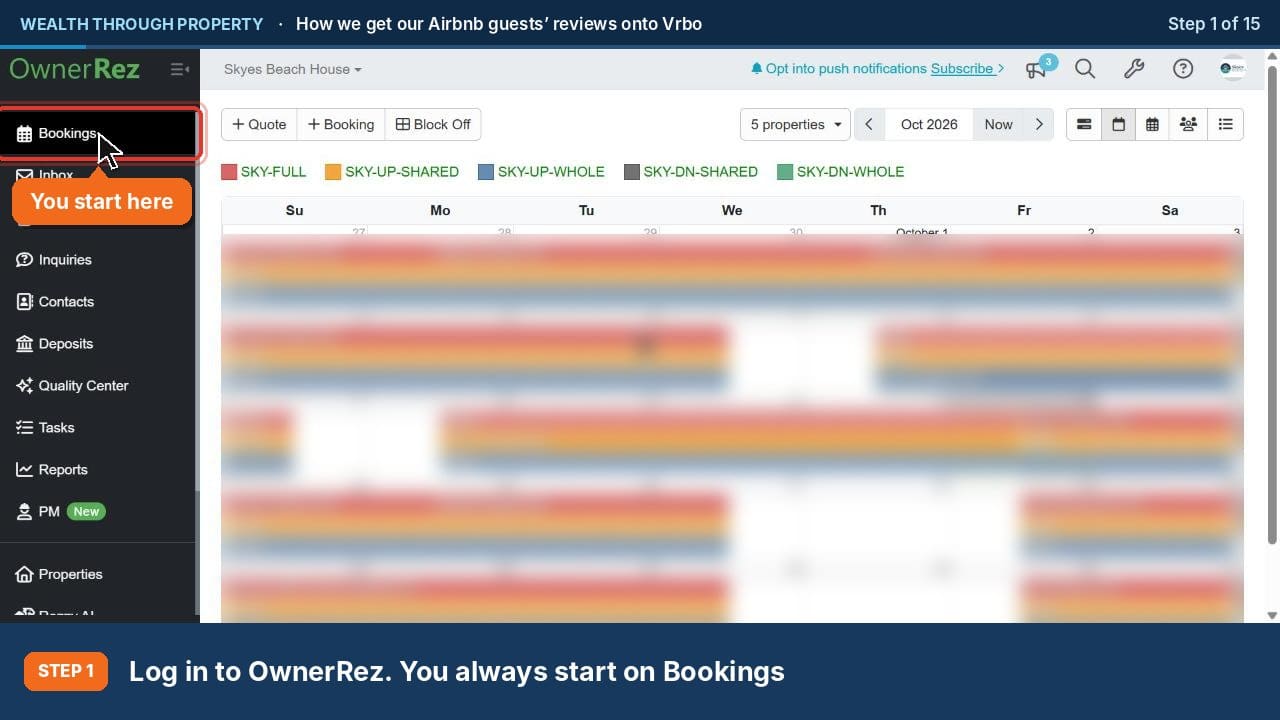 ▶Free lesson · IntroductionFree Lesson: How We Get Our Airbnb Guests’ Reviews onto Vrbo (OwnerRez)Vrbo won’t import your Airbnb reviews, but it does accept reviews that guests leave on your own OwnerRez review form. Ask every Airbnb guest to review…