
Lesson: Calculate Your Potential ROI
Module 2: Evaluating Opportunities and Markets
Airbnb ROI is net profit divided by total investment, but the real test is whether the property makes money after every running cost, not just on gross revenue. Net yield, cash-on-cash return and break-even occupancy show how safe a deal is. A property should work in an average year and survive a bad one; if it only works in a good year, it is speculation.
What this lesson covers
- Why ROI comes before furniture
- The five numbers that decide a deal
- The two WTP calculators
- Two “management fees”: don’t mix them up
- Worked example, step 1: the property and the assumptions
- Step 2: setup costs and cash in
- Step 3: running costs and net operating income
- One stay, start to finish
- Your channel mix changes the maths
- Step 4: the returns
The full lesson is for clients
Clients get every step, the live walkthrough videos and our exact settings and templates from Skye’s Beach House.
Questions people ask
What is a good break-even occupancy for an Airbnb?
Lower is safer. Break-even occupancy is the share of nights you need booked just to cover costs, so the further it sits below the occupancy you can realistically achieve, the more bad luck the deal can absorb.
What is the difference between gross yield and net yield?
Gross yield is revenue divided by the purchase price, which flatters short-term rentals because it ignores their higher costs. Net yield uses income after running costs, so it is the fairer comparison with long-term renting.
Is short-term rental more profitable than long-term renting?
It can be, but it involves more work, cost and risk. The extra profit over a long-term lease is effectively your pay for that, so if the gap is small, short-term rental may not be worth it.
Watch a free lesson
 Free lesson · IntroductionWhy Naming and Identity Shape Guest BehaviourYour Airbnb hosting identity is the name that sits above all your listings, and it becomes your email address. If you might ever own more than one pro…
 Free lesson · IntroductionFree Lesson: Airbnb Arbitrage – What It Is, Why Landlords Resist It & the Margin RealityAirbnb arbitrage means leasing a property long-term at a fixed rent, running it as a short-term rental with the landlord’s written permission, and kee…
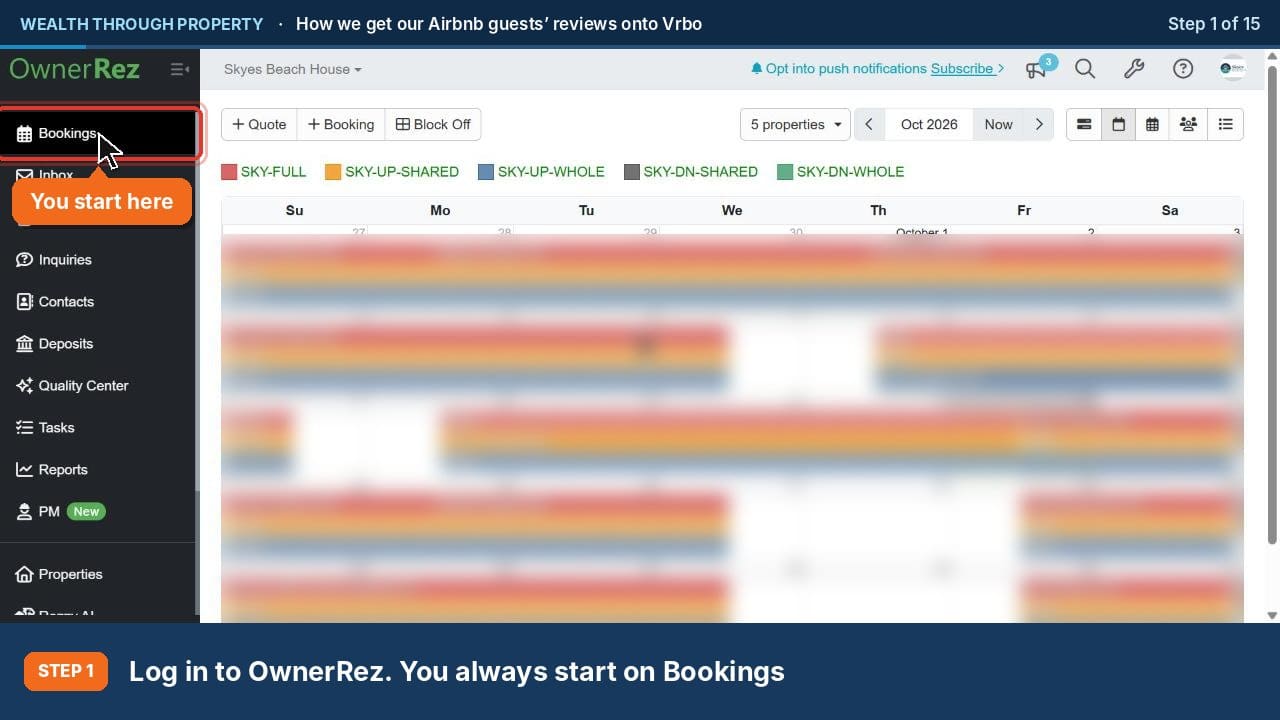 ▶Free lesson · IntroductionFree Lesson: How We Get Our Airbnb Guests’ Reviews onto Vrbo (OwnerRez)Vrbo won’t import your Airbnb reviews, but it does accept reviews that guests leave on your own OwnerRez review form. Ask every Airbnb guest to review…