
Lesson: Arbitrage - The Numbers: Break-Even, Serviceability & Reserves
Module 3: Airbnb Arbitrage
Landlords don't ask how much an arbitrage operator will make; they ask what happens if the rent can't be paid. The strongest answer uses conservative revenue, a break-even well below realistic occupancy, income that doesn't depend on bookings, a dedicated cash reserve and a written exit threshold. Overselling potential income tends to backfire, because it makes the deal sound inflated or fragile.
What this lesson covers
- Rent default is the credibility test
- Don’t oversell the income
- The answer that wins
- Break-even, ratios, reserves and exit
- Step 1. Get conservative revenue data
- Step 2. Work out your break-even
- Step 3. Calculate the three serviceability ratios
- Step 4. Set your reserve: five months at launch, three months forever
- Step 5. Launch within a week
- Step 6. Write your exit threshold before you sign
The full lesson is for clients
Clients get every step, the live walkthrough videos and our exact settings and templates from Skye’s Beach House.
Questions people ask
How do you calculate break-even for an Airbnb?
Break-even revenue is your fixed costs divided by one minus your variable costs as a share of revenue. Dividing that by your average nightly rate across the year gives the occupancy you need just to cover costs.
Why shouldn't I show a landlord my best-case Airbnb income?
Very high projections can make a landlord wonder why they wouldn't run it themselves, or suspect the numbers are inflated. Conservative figures that comfortably cover the rent are more convincing.
Why does an Airbnb arbitrage operator need a cash reserve?
A reserve kept separate from day-to-day money covers rent through slow periods without relying on bookings. It shows the landlord that a quiet season won't put their rent at risk.
Watch a free lesson
 Free lesson · IntroductionWhy Naming and Identity Shape Guest BehaviourYour Airbnb hosting identity is the name that sits above all your listings, and it becomes your email address. If you might ever own more than one pro…
 Free lesson · IntroductionFree Lesson: Airbnb Arbitrage – What It Is, Why Landlords Resist It & the Margin RealityAirbnb arbitrage means leasing a property long-term at a fixed rent, running it as a short-term rental with the landlord’s written permission, and kee…
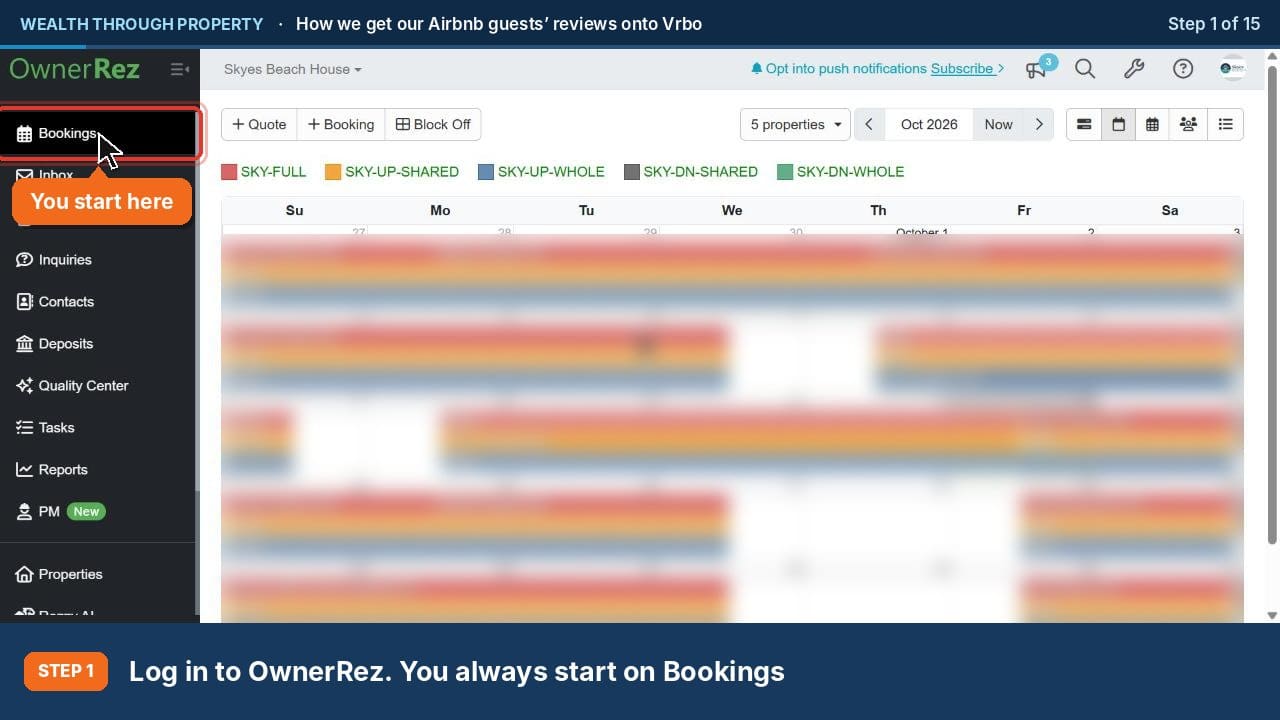 ▶Free lesson · IntroductionFree Lesson: How We Get Our Airbnb Guests’ Reviews onto Vrbo (OwnerRez)Vrbo won’t import your Airbnb reviews, but it does accept reviews that guests leave on your own OwnerRez review form. Ask every Airbnb guest to review…