From One Home to Eight Investment Properties and an Airbnb: What My Journey Taught Me
My property journey did not begin with a sophisticated portfolio strategy. It began with fear, two quickly accepted offers and very little understanding of negotiation, borrowing limits, portfolio risk or what it would take to continue holding property when life became difficult.
Key Takeaway
My portfolio grew through persistence, practical mentoring and a willingness to change my process after making mistakes. The useful lesson is not to copy a property count or timeline. It is to build a clearer process for assessing value, protecting cash flow, managing borrowing capacity and deciding when a property no longer fits.
Lessons Behind The Journey
The most valuable lessons came from the stages that did not go according to plan.
1Research beyond yield: Advertised rent does not show whether the purchase price, property condition and local demand support the decision.
2Protect holding capacity: A loan approval does not remove the need for realistic expenses, buffers and contingency planning.
3Understand the next purchase: Each acquisition can affect future serviceability, flexibility and portfolio risk.
4Use practical guidance: Information becomes more useful when it is applied to a real suburb, property, offer or finance constraint.
5Expect circumstances to change: Relationships, businesses, lending policies, interest costs and markets do not always follow the original plan.
What Financial Freedom Meant In My Own Journey
When I talk about reaching financial freedom, I am describing my personal position. Building the portfolio eventually gave me enough choice to step back from my trade business and redirect more of my time toward work I genuinely wanted to do.
That outcome did not come from one perfect property, a guaranteed market or a simple formula. It followed uncertain purchases, personal upheaval, changing lending conditions, negotiation mistakes and years of learning how property decisions work in practice.
A personal investment story can offer useful lessons, but it should never be treated as a forecast of what another investor will achieve.
Income, borrowing capacity, property values, expenses, interest rates, family commitments and risk tolerance vary significantly. Two people can buy similar properties and experience very different results because their purchase prices, finance, holding costs and personal circumstances are different.
The useful part of this story is therefore not simply the final number of properties. It is how each difficult stage changed the questions I asked before making the next decision.
Taking The First Leap Without A Clear Strategy
When I first considered buying an investment property, I imagined carrying a second mortgage for the next 30 years. The prospect felt intimidating. I was concerned about repayments, tenants, vacancies and everything else that might go wrong.
My initial search focused on the Central Coast of New South Wales. I attended inspections but regularly found that the expected rent appeared lower than the loan repayments. With a limited budget, I broadened the search and began looking in Orange in Central West NSW.
At that point, I had approximately $500,000 available across the total buying budget and very little strategy beyond looking at rental yield. I secured one property for approximately $160,000 and another for approximately $270,000 on the same day.
Both offers were accepted within hours. Rather than feeling confident, I panicked. I later recognised that I had offered more than may have been necessary because I had not yet developed a disciplined negotiation process.
An accepted offer does not automatically confirm good valueThe buyer still needs evidence that the price is supported by comparable sales, property condition, rental demand, required repairs and the role the property is expected to play.
What The First Two Purchases Taught Me About Value
My early approach relied heavily on price and advertised rental yield. Those numbers mattered, but they did not tell the whole story. A cheaper property can still be poor value if it needs extensive work, attracts inconsistent tenant demand or is difficult to sell later.
I gradually learned that value needs to be considered from several directions. The purchase price should be compared with genuinely similar recent sales. The rent should be checked against current leasing evidence rather than relying only on the selling agent’s estimate. The property’s condition should be considered alongside immediate repairs and likely future maintenance.
The local market also matters. Investors should understand who rents in the area, what types of properties they prefer, how much competing rental stock exists and whether the property is likely to appeal to future owner-occupiers as well as tenants.
Price EvidenceCompare recent sales with similar land, condition, accommodation, location and buyer appeal.
Rental EvidenceReview comparable leased properties, current listings and likely vacancy rather than relying on one estimate.
Property RiskConsider building condition, maintenance exposure, insurance, layout and future resale limitations.
A strong buying decision is not created by one attractive number. It comes from several pieces of evidence supporting the same conclusion.
Buying The Properties Was Only The Beginning
Securing the first two properties was one decision. Holding them responsibly was another. My trade business was still new, the household budget was tight and I was learning how rent, property expenses and loan commitments interacted outside a spreadsheet.
A property can appear manageable when the calculation includes only the advertised weekly rent and the current mortgage repayment. That calculation may overlook vacancies, property management fees, council rates, water charges, insurance, repairs, maintenance and unexpected capital expenses.
There is also a difference between a property being affordable today and remaining manageable if circumstances change. Interest costs may increase. A tenant may leave. A major repair may arise. Personal or business income may fall. More than one of these pressures can occur at the same time.
The WTP property resources and calculators can help investors model different scenarios. These tools provide general information, and assumptions should be reviewed with appropriately qualified finance, tax and legal professionals where relevant.
Being approved to borrow does not automatically mean the repayments, risks and ongoing costs will remain comfortable under every future scenario.
A More Useful Way To Think About Property Cash Flow
One of the biggest improvements to my process was learning to look at cash flow in layers rather than relying on a simple rent-minus-mortgage calculation.
The first layer is the property’s regular operating position. This includes realistic rent and recurring costs such as management, rates, insurance and routine maintenance. The second layer is finance: loan repayments, interest rates and the effect of future rate changes.
The third layer is irregular expenditure. Hot-water systems fail, roofs eventually need attention, appliances require replacement and older properties may demand more ongoing work. These costs do not arrive in equal weekly amounts, but they still belong in the investment decision.
The final layer is personal resilience. Investors need to consider whether they could continue holding the property during a vacancy, a business slowdown, parental leave, illness, separation or another unexpected change.
1Regular income: Use realistic rent supported by current market evidence.
2Regular expenses: Include management, rates, insurance, strata where relevant and routine maintenance.
3Finance pressure: Test repayments at a higher interest rate rather than assuming current costs will remain unchanged.
4Irregular costs: Allow for vacancies, larger repairs and replacement of major items.
5Personal buffer: Consider how long the property could be held if household or business income fell.
This approach does not predict every future expense. It creates a more honest view of what the property may require from the owner.
Rebuilding After A Major Personal Setback
Within months of buying the first properties, my marriage ended. The divorce affected my confidence, my sense of direction and my ability to concentrate on the trade business I had worked hard to establish.
For a period, property strategy was no longer the most important challenge. I was dealing with a much broader personal reset. It took time to rebuild my confidence, regain control of the business and begin thinking clearly about the future again.
This stage taught me that a property portfolio does not exist separately from the rest of life. A plan that looks manageable today may feel very different after separation, illness, employment changes, family commitments or business pressure.
It also changed the way I thought about risk. Risk was not limited to whether a suburb might grow or whether a property would rent. It included the possibility that my own capacity to support the portfolio could change.
Portfolio planning should allow for life outside propertyA resilient strategy considers personal commitments, income stability, access to emergency funds and the investor’s ability to keep making decisions during a difficult period.
Holding The First Properties Through COVID Uncertainty
The COVID period introduced a new form of pressure. I worried about whether the tenants would remain employed, whether the properties would stay occupied and whether I might have to cover the full cost of both mortgages.
Selling did not feel like an easy solution because I was concerned the properties might not achieve what had originally been paid. That left a difficult choice between accepting a possible loss and finding a way to continue holding them.
I remained in communication with the property manager and tried to stay flexible while tenants and owners were dealing with an unusual situation. Holding the properties through that period reinforced the importance of communication, cash-flow planning and avoiding panic-driven decisions.
It did not prove that property is always stable or profitable. It showed me how important it was to understand the options before reacting. That meant knowing the current tenancy position, available cash reserves, likely holding costs and what support might be needed.
When a portfolio is under pressure, investors may need coordinated input from a property manager, broker, accountant, lawyer or financial adviser. The right response depends on the actual issue rather than a general rule.
Growing The Portfolio Changed The Finance Conversation
After the first properties remained manageable, I became more confident and continued adding to the portfolio. My research gradually moved beyond rental yield to consider market conditions, comparable sales, rental demand, holding costs and the role each property would play.
After my fourth investment property, finance became more difficult. Lenders applied their own assessment rates, expense assumptions and treatment of rental income rather than relying on my calculation of the portfolio’s actual cash flow.
This was an important turning point. A property could be generating rent while still reducing the borrowing capacity recognised under a lender’s policy. A portfolio that felt manageable operationally could receive a very different assessment from a bank.
Lenders may also assess existing debts differently from the way an investor views them. Credit-card limits, personal loans, property expenses, household spending and other commitments can all affect the result. Not all rental income may be counted at its full amount.
Borrowing capacity should therefore be reviewed with a qualified broker or lender before an investor relies on being able to make another acquisition. Finance policies and personal circumstances can change, and a strategy that depends on continuous borrowing can stall earlier than expected.
The Next Property Should Be Assessed Against The Whole Portfolio
A common mistake is to evaluate each property as though it will sit alone. Once an investor owns several properties, the next purchase needs to be considered against the strengths and weaknesses already present in the portfolio.
If the existing portfolio is concentrated in one region, another purchase in the same area may increase exposure to the same employment market, weather event, infrastructure change or supply cycle. If several properties have high maintenance requirements, another similar property may increase operating pressure.
The next purchase should also be considered in relation to cash flow, debt, future borrowing capacity and the investor’s long-term objective. A property that looks attractive individually may not be the right addition if it duplicates existing risk or consumes too much flexibility.
Portfolio BalanceIdentify whether the purchase adds a different location, price point, tenant market or property type.
Cash-Flow ImpactCalculate how the purchase changes total holding costs rather than viewing the new property in isolation.
Future FlexibilityConsider whether the purchase supports or restricts later borrowing, lifestyle and exit options.
The objective is not to make a portfolio look diversified on paper. It is to avoid allowing one repeated weakness to affect every property at the same time.
A Readiness Test Before Adding Another Investment Property
Before considering another acquisition, I now believe an investor should be able to explain why the next property belongs in the portfolio. A general desire to own more property is not enough.
The investor should understand the existing portfolio’s cash flow, current equity position, major maintenance risks and finance constraints. They should also know whether the next purchase is intended to improve income, provide access to a different market, add development potential, support a short-term-rental strategy or serve another defined purpose.
1Existing portfolio: Are the current properties operating as expected, with no major unresolved issues?
2Available buffer: Would sufficient reserves remain after the deposit, buying costs and initial repairs?
3Finance position: Has borrowing capacity been reviewed using current lender policies and expenses?
4Property purpose: Can the investor explain what the purchase adds to the wider portfolio?
5Downside plan: What would happen if the property remained vacant, required repairs or produced less rent than expected?
6Personal capacity: Does the investor have the time, confidence and support required to manage another asset?
If those questions cannot be answered clearly, the next step may be to improve the existing position rather than rush into another purchase.
Why Information Alone Was Not Enough
I invested in courses because I wanted to improve my understanding of market research, negotiation and portfolio strategy. Some of the information was useful, but I often struggled to apply broad theory to the specific property or offer in front of me.
Knowing that comparable sales matter is different from deciding which sales are genuinely comparable. Learning that vacancy rates matter is different from understanding whether a published figure reflects the tenant market for the exact type of property being considered.
Negotiation created the same problem. General tactics did not automatically tell me what to offer, what conditions to include or when to walk away from a property I liked.
The turning point was finding a mentor with substantial practical investment experience. Instead of offering a generic formula, the mentor helped me examine live decisions, challenge assumptions and better understand lending constraints, property risk and negotiation.
What Practical Property Mentoring Should Help With
That experience later shaped how I viewed practical property mentoring. The value was not simply receiving more information. It was having experienced support while applying information to an actual situation.
Useful mentoring should not remove the client’s responsibility or guarantee an outcome. It should help the investor ask better questions, identify missing evidence and recognise when emotion or urgency is influencing the decision.
Strategy ReviewClarify the investor’s objective, available resources, risk tolerance and realistic next step.
Property ReviewExamine market evidence, rent, comparable sales, condition, risks and suitability for the brief.
Decision SupportPressure-test an offer, negotiation position, shortlist or concern before the investor commits.
A mentor should also be clear about professional boundaries. Lending advice should come from appropriately authorised finance professionals. Tax, legal and financial advice should come from qualified advisers who understand the investor’s circumstances.
Considering Different Structures Without Treating Them As Shortcuts
When conventional borrowing became more difficult, I began learning about other ways acquisitions might be structured. These discussions included joint ventures, Special Purpose Vehicles and arrangements involving more than one party.
Complex structures should not be treated as a way to avoid responsible lending or remove risk. They can introduce legal obligations, tax consequences, ownership issues, additional costs and responsibilities between the people involved.
A joint venture may also introduce risks that are not directly connected to the property. The participants need to consider decision-making authority, contributions, profit and loss allocation, exit rights, dispute processes and what happens if one party’s circumstances change.
A more complicated structure is not automatically a better strategy. It must be appropriate for the transaction, the participants and the associated risks.
Anyone considering an SPV, company, trust or joint venture should obtain independent lending, legal, accounting and tax advice before proceeding. What formed part of my personal journey may be unsuitable for someone else.
Adding Short-Term Rental Experience
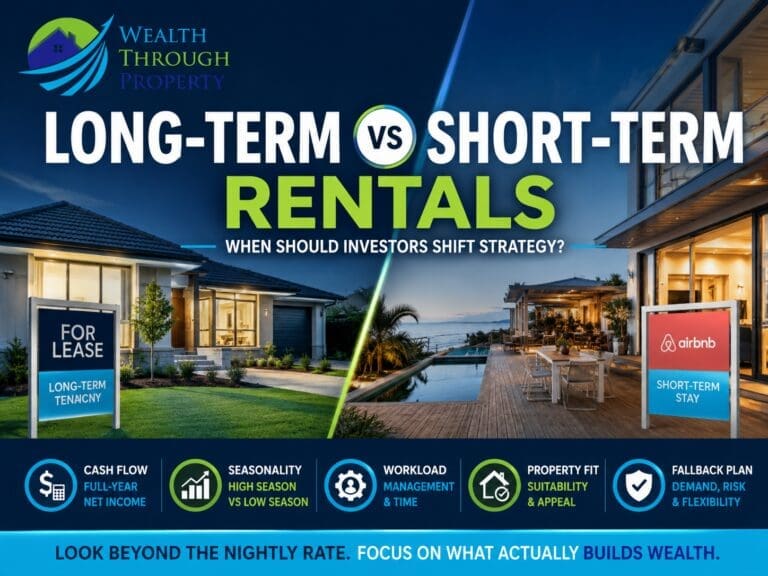
As my experience grew, I also began examining the differences between conventional long-term rentals and short-term accommodation. The two strategies involve different demand drivers, expenses, operating responsibilities and income patterns.
An Airbnb or short-term rental is not simply an ordinary investment property with a different listing. Location, guest demand, local rules, seasonality, layout, presentation, cleaning, pricing and day-to-day management can all affect performance.
Gross booking revenue can also give an incomplete picture. Investors may need to allow for platform fees, management, cleaning, linen, utilities, consumables, furniture replacement, maintenance, insurance and periods of lower demand.
Investors considering this direction can begin by comparing long-term investment properties and short-term rentals. The property needs to be assessed for the intended strategy rather than assuming any existing rental can become a successful Airbnb.
What Makes A Property More Suitable For Short-Term Rental
A suitable short-term-rental property needs more than attractive photographs. The surrounding area should provide a clear reason for guests to visit, whether that is a beach, business activity, events, hospitals, family attractions, outdoor experiences or access to a major destination.
The property itself should support the intended guest group. Families, couples, workers and larger groups have different requirements. Parking, bedroom configuration, bathrooms, outdoor areas, heating, cooling, privacy and ease of access can all influence guest appeal.
Local planning rules, strata by-laws, insurance requirements and operating restrictions should be checked before purchase. Investors should also consider who will manage enquiries, cleaning, maintenance, pricing and guest issues.
1Guest demand: Identify why guests visit the area and whether demand is year-round or seasonal.
2Property fit: Match the layout and amenities to the intended guest group.
3Operating costs: Model expenses beyond the mortgage and compare net income, not only booking revenue.
4Rules and approvals: Check current council, strata, insurance and other requirements before relying on the strategy.
5Fallback position: Consider whether the property could still work as a long-term rental or be sold to a broader buyer market.
A short-term rental buyers agent can help assess location, guest demand, layout, setup requirements and wider property fundamentals before purchase. Bookings, occupancy and income remain variable and cannot be guaranteed.
The Mistakes That Changed My Buying Process
Looking back, one of my clearest admissions is that I overpaid for several early properties. I was inexperienced, did not have a strong negotiation process and felt relieved when an offer was accepted rather than questioning whether the price was well supported.
Over time, I developed a more disciplined approach. That meant defining the investment brief, reviewing comparable sales, checking realistic rental evidence, understanding the property’s risks and deciding on a walk-away price before emotion or agent pressure took over.
Define The BriefKnow what the property needs to achieve before beginning the search.
Review The EvidenceCheck value, rent, condition, costs, local demand and competing stock.
Set The LimitDecide when the property no longer fits before entering the negotiation.
These lessons now influence the support provided through the Investment Property Buyers Agent service. The objective is not to accumulate properties merely to increase the portfolio count. Each acquisition should have a clear reason for being included.
A More Disciplined Offer And Negotiation Process
A negotiation should begin before the buyer names a price. The investor needs to understand the property’s likely market value, any work required after settlement, the vendor’s process and the conditions needed to protect the purchase.
The highest price an investor can technically afford is not necessarily the right price to pay. The offer should reflect the evidence and leave room for the property to meet the investor’s objectives after buying costs, repairs and ongoing expenses are included.
Conditions can be just as important as price. Depending on the transaction and professional advice, an offer may need to address finance, building and pest inspections, settlement timing or other due-diligence requirements.
Most importantly, the walk-away point should be set before the investor becomes emotionally committed. Agent urgency, competing interest and fear of missing out should not replace the buyer’s own analysis.
The aim is not to win every negotiationThe aim is to buy only when the price, conditions, property evidence and portfolio strategy remain aligned.
How To Build A More Resilient Property Portfolio
A resilient portfolio is not necessarily the biggest portfolio. It is one the investor can understand, support and adjust when conditions change.
That starts with avoiding unnecessary concentration. It continues with realistic cash-flow planning, regular finance reviews, maintenance planning and a clear understanding of why each property is being held.
Investors should also review their portfolio periodically rather than assuming every property must be held forever. A property that suited the original strategy may become less appropriate after changes to income, debt, family plans, maintenance exposure or market conditions.
1Know every property: Understand current rent, expenses, debt, condition and likely upcoming work.
2Review the whole portfolio: Identify concentration, weak cash flow and duplicated risks.
3Keep appropriate buffers: Allow for vacancies, repairs, rate changes and personal disruption.
4Maintain professional support: Use appropriately qualified advisers for finance, tax, legal and financial matters.
5Retain exit options: Consider tenant appeal, owner-occupier demand and the ease of selling if the strategy changes.
The purpose of this discipline is not to eliminate uncertainty. That is impossible. It is to reduce avoidable surprises and improve the investor’s ability to respond.
What I Would Tell Someone At The Beginning
Starting can be important, but beginning without understanding the potential downside can create unnecessary pressure. Before buying, consider the purpose of the investment, the realistic holding position and what may happen if rent, interest costs, repairs or personal income change.
Do not measure your progress only against the number of properties another investor owns. A smaller and more manageable portfolio may be more appropriate than a larger portfolio that creates weak cash flow, excessive debt or constant stress.
Do not assume the next property must look like the previous one. The next purchase should address the portfolio’s current needs rather than repeating a strategy simply because it worked before.
Most importantly, do not confuse a clearer process with certainty. Good research, experienced support and appropriate professional advice can improve a decision, but they cannot guarantee capital growth, rental income, finance approval or financial freedom.
A Practical Starting Plan For Investors
For someone at the beginning of the journey, the first useful step is not immediately searching property listings. It is building a clear brief and understanding the financial position that will support it.
1Clarify the objective: Decide what the property is intended to contribute and over what timeframe.
2Review finance: Speak with an appropriately qualified broker or lender about current capacity and likely constraints.
3Set the holding limit: Decide what level of ongoing contribution and risk is personally manageable.
4Build the property brief: Define the budget, location criteria, property type, tenant market and unacceptable risks.
5Research consistently: Compare sales, rents, supply, demand and property condition using the same process for every option.
6Complete due diligence: Obtain suitable inspections, contract advice and professional input before committing.
7Negotiate from evidence: Use the research to set the offer and walk-away point before emotion takes over.
A clear process will not make every purchase successful, but it can help an investor avoid decisions that never fitted the strategy in the first place.
Want to pressure-test your next property decision?Use practical property mentoring to review your strategy, suburb, shortlist, numbers or proposed offer while you remain responsible for the final decision.
FAQs About Building An Investment Property Portfolio
Does owning several properties automatically create financial freedom?
No. Property ownership can involve debt, vacancies, maintenance, changing interest costs, taxation and market risk. Financial freedom was the author’s personal experience and should not be treated as a guaranteed result.
How quickly did this property portfolio grow?
The original personal account describes the main portfolio growth occurring over approximately three years. That timeframe should not be treated as a benchmark because finance, income, property values, market conditions and risk vary between investors.
How many investment properties should someone aim to own?
There is no correct number. The appropriate portfolio size depends on the investor’s objectives, borrowing position, cash flow, risk tolerance, personal commitments and ability to manage the assets. A smaller resilient portfolio may be more suitable than a larger highly pressured one.
Why can borrowing become harder as a portfolio grows?
Lenders apply their own serviceability calculations, assessment rates, expense assumptions and treatment of rental income. A property earning rent can still affect the borrowing capacity recognised under a lender’s policy.
What should be checked before buying another investment property?
Review the existing portfolio, available buffers, current borrowing position, realistic cash flow, property purpose and downside scenarios. The next purchase should add something useful rather than simply increasing the property count.
Is rental yield enough to choose an investment property?
No. Yield is one measure. Investors should also consider the purchase price, comparable sales, tenant demand, property condition, maintenance exposure, local supply, finance and future resale appeal.
Is an SPV or joint venture suitable for every investor?
No. These arrangements can create legal, lending, ownership, tax and relationship risks. Investors should obtain independent professional advice before entering a complex structure.
Is an Airbnb automatically more profitable than a long-term rental?
No. Short-term rental performance depends on guest demand, seasonality, local rules, operating costs, management and property suitability. Gross booking revenue should not be confused with net income.
Should another investor copy the purchases described in this story?
No. This article describes a personal experience rather than recommending particular properties or strategies. Every purchase should be reviewed against the buyer’s finances, objectives, risk tolerance, professional advice and current market evidence.
What is the difference between property mentoring and a buyer’s agent?
Property mentoring provides guidance while the client remains hands-on and responsible for implementation. A buyer’s agent can take a more active role in research, property search, assessment, negotiation and acquisition support under the agreed service.
Can research and professional support guarantee a successful investment?
No. Research, due diligence and professional support can improve the quality of a decision, but they cannot guarantee growth, rental income, finance approval, short-term-rental bookings or profit.
```
Related support
Services and tools that connect to this topic
Move through the selected WTP pages and open the ones that connect to the article topic.