Should You Stay on Airbnb Alone or Diversify Your Booking Channels?
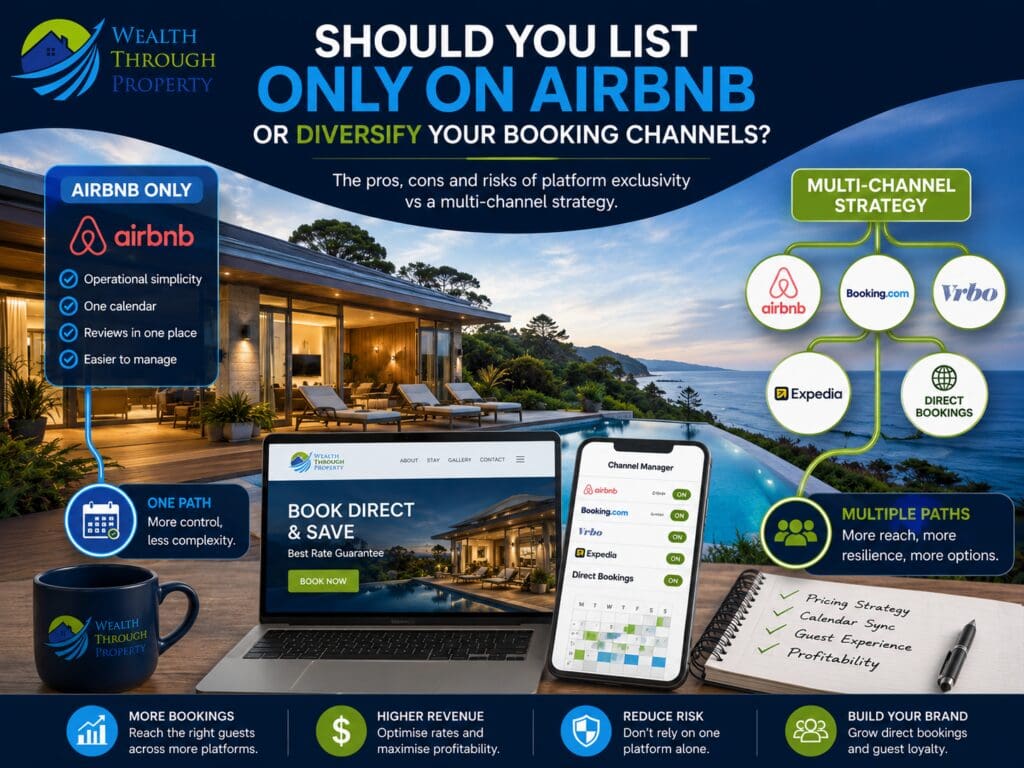
Listing on one platform can make a short-term rental easier to manage, but it also concentrates your bookings, reviews and visibility in one ecosystem. Using several channels may broaden demand, yet it introduces calendar, pricing, policy and operational complexity that must be controlled properly.
SLScott LevouneFounder, Wealth Through PropertyUpdated 30 Oct 2026•16 min read•✓ Facts checked against official sources
Airbnb exclusivity can suit a well-performing property when simplicity, review concentration and operational control matter most. Diversification can reduce dependence on one platform and expose the property to additional demand, but this depends on pricing, calendars, communication and guest expectations remaining coordinated.
Before You Add Another Platform
More channels do not automatically create better performance. Before adding another platform, confirm that the existing listing converts well, the calendar stays accurate across every channel, and total guest price, fees and policies line up. A weak setup copied to more sites usually adds work, not bookings.
1Measure current performance: Review occupancy, average rate, booking lead time, conversion and net revenue.
2Protect the calendar: Put reliable synchronisation and double-booking controls in place.
3Compare the full guest offer: Check pricing, fees, policies, minimum stays and inclusions across every channel.
What Does Airbnb Platform Exclusivity Mean?
Platform exclusivity means relying on Airbnb as the primary or sole place where guests can discover and book the property. The owner may still have social media or a basic website, but the reservation, payment and guest relationship are usually controlled through Airbnb.
This can be an intentional strategy rather than a mistake. A new host may want to learn one operating system before adding more complexity. An established listing may already receive enough suitable demand through Airbnb to meet the owner's objectives.
The concern is not that Airbnb is inherently the wrong platform. The concern is concentration. When one channel controls nearly all enquiries and reservations, changes to visibility, policies, fees, account access or local demand can have a larger effect on the business.
Exclusivity can be efficient, but efficiency and resilience are not the same thing.
The Advantages of Listing on Airbnb Alone
Managing one platform can reduce administrative pressure. The owner has one calendar, one message centre, one review profile, one set of booking settings and one main payout process to monitor. That simplicity suits new hosts and busy self-managers, and it keeps reviews in one place.
Operational simplicityOne primary set of rates, rules, messages, policies and availability settings.
Concentrated reviewsBookings and guest feedback build one visible platform profile instead of being divided.
Easier quality controlListing changes, photos and guest communication can be managed in one place.
Exclusivity can also reduce the risk of inconsistent information appearing across several channels. Guests are less likely to see different amenity descriptions, house rules, cancellation conditions or check-in details depending on where they book.
For hosts who self-manage and have limited time, this simplicity may be valuable. It allows them to focus on pricing, presentation, communication, cleanliness and guest experience instead of spreading attention across several dashboards.
The Risks of Depending on One Booking Platform
When one platform produces most or all reservations, the property becomes more exposed to events outside the owner's direct control. Search visibility can change, policies may be updated, technical problems can occur and account reviews or restrictions may interrupt access.
A host may also become too dependent on one type of booking behaviour. If demand on that platform weakens in the property's market or season, there may be no established secondary channel ready to compensate.
1Visibility concentration: A decline in performance on one platform affects most of the booking pipeline.
2Policy dependence: The host must operate within the platform's current terms, tools and processes.
3Limited guest ownership: The platform largely controls how the booking relationship begins and is managed.
4No immediate backup: Building another effective channel can take time if the main source of bookings is disrupted.
Why More Exposure Does Not Automatically Mean More Bookings
Adding a property to more websites increases theoretical exposure, but exposure has value when the listing is competitive for the guests using that channel. The photos, headline, pricing, stay restrictions, cancellation settings and total guest price still need to support conversion.
A weak listing copied across four platforms remains a weak listing. It may receive more views without producing enough profitable reservations to justify the additional work and channel costs.
Distribution can also become fragmented. When a booking arrives through one channel, those dates must be removed from every other channel quickly and accurately. A calendar filled with disconnected blocks may reduce the number of useful date combinations that remain available.
Optimise before you multiplyReview the photography, listing copy, pricing, minimum stays, booking rules and guest experience on the current channel before duplicating the same weaknesses elsewhere.
What Actually Supports Visibility and Conversion?
No host controls a platform's entire search system. Search results can be influenced by many factors, including the guest's dates, destination, number of guests and price range, as well as the listing's location, availability, pricing, images, reviews, ratings and ease of booking.
That means hosts should avoid reducing performance to one supposed algorithm trick. A listing normally needs a strong overall offer: professional photos, accurate information, competitive total pricing, sensible stay settings, reliable availability and a guest experience that supports positive feedback.
Guest relevanceThe property must match the guest's dates, group size, location and trip requirements.
Listing strengthPhotography, title, description, amenities and reviews need to support the booking decision.
Booking frictionPrice, restrictions, rules and availability can make a suitable property harder or easier to book.
Hosts should monitor their own data rather than relying on broad assumptions. The useful question is not whether multi-channel distribution works for another property. It is whether another channel can deliver suitable, profitable demand for this property.
Channel Fit Matters More Than Channel Count
Different booking channels may attract different trip types, booking windows and guest expectations. A channel that works well for a city apartment may not perform the same way for a large coastal home, regional retreat or family holiday house. Judge each channel on fit and net revenue.
Before adding another platform, look at how comparable properties in the same market are positioned. Consider whether guests on that channel appear to book the same property type, group size, price range and length of stay that your property is designed to serve.
Property typeWhole homes, apartments, luxury stays and regional properties can attract different demand patterns.
Trip purposeFamilies, couples, workers, event visitors and long-stay guests may search in different places.
Booking behaviourLead time, cancellation sensitivity and preferred stay length can vary by channel and season.
The aim is not to appear everywhere. It is to appear where the right guests are already searching and where the property can compete effectively.
When Multi-Channel Distribution Can Make Sense
Diversification can be useful when the existing channel is performing reasonably well and the owner has enough operational capacity to support another booking source. It may also suit properties with a clear audience that searches across several travel websites.
A larger holiday home, regional retreat, beach property, apartment or corporate-friendly stay may perform differently across channels. The result depends on the location, property type, season, trip purpose and how guests in that market prefer to book.
1You have spare availability: Good-quality dates remain unbooked despite a competitive existing listing.
2The property has channel fit: Another platform appears to serve relevant demand in the property's market.
3Your systems are ready: Rates, calendars, messages and booking rules can be managed consistently.
4You can measure net results: Performance can be compared after commissions, discounts, labour and operating costs.
The Operational Risks of Listing on Multiple Platforms
The main challenge is not creating another listing. It is keeping every channel accurate after the listing goes live. Rates, availability, minimum stays, cleaning fees, guest limits, pet settings and cancellation conditions must remain coordinated.
Calendar errors can create double bookings, blocked dates or guest disputes. Basic calendar links may help, but they may not provide the same level of real-time control as a suitable property-management system or channel manager.
Owners should also consider communication. Each platform may have different message workflows, payment processes and guest expectations. If response times or check-in information become inconsistent, the extra distribution can damage the guest experience rather than strengthen it.
Multi-channel distribution is an operating-system decision, not just a marketing decision.
Calendar Synchronisation Is One Part of the System
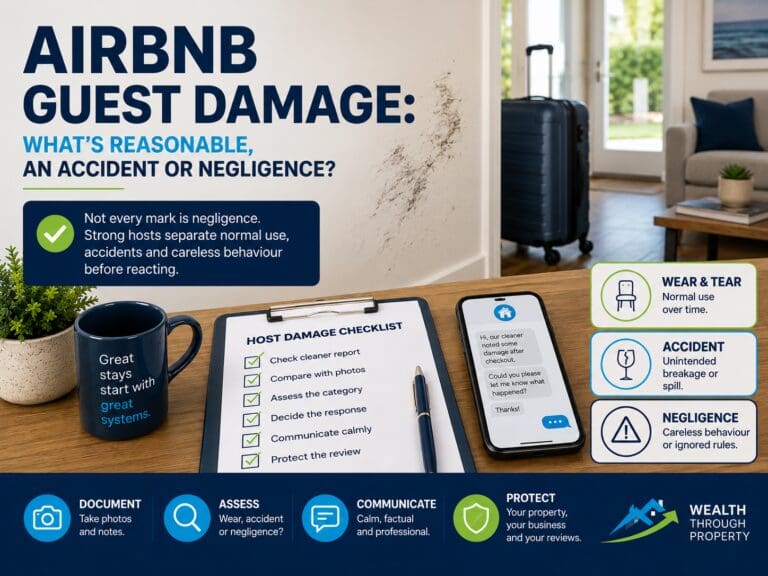
Preventing double bookings is essential, but a functioning multi-channel setup requires more than calendar links. The owner also needs to control rates, stay restrictions, cleaning schedules, guest messages, deposits, damage processes and payment records.
A booking may synchronise correctly while other details remain inconsistent. One channel may allow a two-night stay while another requires three. One may display a different guest capacity, pet rule or check-in time. These differences can create avoidable disputes.
1Availability: Booked dates and owner blocks must update across every connected channel.
2Rates: Base rates, seasonal pricing and promotions need clear channel rules.
3Restrictions: Minimum stays, arrival days and advance-notice settings should not conflict.
4Operations: Cleaning, linen, check-in and guest support must receive accurate booking details.
Keep Pricing and Policies Consistent
A host does not necessarily need to display the same nightly rate on every channel. Commission structures, guest fees, payment arrangements and promotional tools may differ. However, the pricing logic should remain deliberate and the final guest offer should make sense.
Compare the total amount a guest sees, not just the base nightly rate. A lower advertised rate can become less competitive after cleaning, service or other mandatory charges are included.
House rules, occupancy limits, pet conditions, minimum stays, deposits and cancellation settings should also be reviewed carefully. Major inconsistencies may confuse guests and create operational problems when two bookings for the same property arrive under different expectations.
Compare like with likeAssess total guest price, owner payout, cancellation exposure, minimum stay, payment timing and workload before deciding which channel performs best.
Measure Net Revenue, Not Just Gross Booking Value
A new channel can appear successful because it produces additional reservations, but gross booking value does not show the full result. Owners should consider commissions, payment fees, discounts, cleaning impact, consumables, support time and any extra software or management costs.
Some bookings may also create awkward calendar gaps that reduce the chance of accepting a longer or more profitable stay. Others may require more communication or generate a higher cancellation risk.
Gross booking valueThe total amount attached to the reservation before channel and operating costs.
Owner payoutThe amount received after platform deductions and applicable fees.
Net contributionThe remaining value after servicing costs, discounts, labour and operational impact.
A channel should be judged by the value it contributes to the property, not simply by the number of bookings it generates.
Review Fragmentation Can Slow Momentum
One benefit of staying on a single platform is that guest reviews accumulate in one place. When bookings are spread across several channels, each profile may grow more slowly even if the property is performing well overall.
This does not mean diversification is a poor strategy, but owners should recognise the trade-off. A newer channel may initially appear less established because it has fewer reviews, even though the property has a strong history elsewhere.
Accurate listing content, professional photography and reliable guest communication become especially important when a channel profile does not yet have extensive review support.
Diversification can strengthen booking resilience while weakening review concentration. Both outcomes should be considered.
Should Direct Bookings Be Part of the Strategy?
A direct-booking website can give an owner another way to accept reservations and build a recognisable property brand. It may reduce dependence on large platforms, but it does not create demand automatically.
The owner must generate traffic, establish trust, process payments securely, communicate policies, manage deposits or bonds where permitted, arrange appropriate insurance and maintain a reliable booking system.
Direct booking often works best as a long-term channel rather than an instant replacement for established marketplaces. Returning guests, referrals, local partnerships, email marketing and useful destination content can gradually support the direct pathway.
Hosts must also follow the terms of each platform and should not attempt to move platform-generated enquiries or active bookings off-platform in breach of those terms.
What Direct-Booking Readiness Actually Requires
A website alone does not create a safe or effective direct-booking channel. Guests need enough confidence to make payment, understand the property's rules and know who is responsible if something goes wrong.
1Secure payment process: Use an appropriate booking and payment system rather than informal payment requests.
2Clear terms: Explain cancellation, guest limits, bonds, damage, pets and house rules before payment.
3Trust signals: Provide accurate property details, professional images, contact information and clear support processes.
4Insurance and compliance: Confirm that direct bookings are covered by suitable insurance and local requirements.
5Traffic strategy: Build demand through returning guests, search content, referrals and local partnerships.
Build Business Assets Outside the Platform
Even hosts who remain on Airbnb alone can reduce operational dependence by keeping important business assets organised outside the platform. This does not mean breaching platform rules or moving active enquiries away from the platform.
Maintain copies of approved property photography, listing copy, amenity details, house manuals, supplier contacts, maintenance records and operating procedures. These assets make it easier to respond if the listing must be rebuilt, transferred or expanded later.
Owners should also keep reliable financial records and understand where bookings originate. A simple owner dashboard can help identify whether performance changes are caused by pricing, demand, conversion, cancellations or calendar settings.
Operating assetsGuest manuals, cleaner procedures, emergency contacts and maintenance records.
Performance dataRevenue, occupancy, average rate, lead time, cancellations and channel contribution.
A Practical Channel Diversification Test
Instead of publishing the property everywhere at once, owners can test diversification in a controlled way. Start with one additional channel that appears to match the location and property type.
1Set a baseline: Record current occupancy, average daily rate, revenue, booking lead time and cancellation rate.
2Select one channel: Choose the strongest apparent fit instead of launching on every available website.
3Build the listing properly: Adapt the content and settings rather than relying on an unchecked automatic import.
4Synchronise operations: Confirm calendars, rates, restrictions, messages and cleaning workflows before opening dates.
5Measure net contribution: Compare revenue after channel costs, discounts, cancellations and extra management time.
6Review guest quality: Consider communication, rule compliance, length of stay and operational fit as well as booking volume.
A new channel should earn its place in the distribution strategy. If it adds little profitable demand but creates frequent calendar or communication problems, the extra exposure may not be worthwhile.
Use a Channel Scorecard Instead of Guesswork
A simple scorecard can help owners compare channels on the factors that matter to the property. The goal is not to create a perfect mathematical model. It is to avoid making the decision based just on booking count or headline commission.
1Demand quality: Does the channel attract guests who fit the property and house rules?
2Net revenue: What remains after fees, discounts and servicing costs?
3Calendar impact: Does the channel fill useful gaps or create awkward booking patterns?
4Cancellation exposure: How often do bookings cancel, and how easily are dates resold?
5Management effort: How much extra time is required for messages, settings and problem resolution?
6Strategic value: Does the channel reduce dependence, improve seasonality or build repeat demand?
When Staying on Airbnb Alone May Be the Better Choice
Remaining exclusive may be appropriate when Airbnb already provides enough profitable demand, the listing has strong momentum and the owner values a simple self-management model.
It may also be sensible when the property is newly launched. Concentrating early bookings and reviews on one channel can make the operating process easier to learn before additional systems are introduced.
However, hosts who stay on Airbnb alone should still prepare for interruption. Keep property information, professional photographs, guest manuals, financial records and operating procedures organised outside the platform. A basic website and compliant contact database can also support long-term resilience without immediately opening another marketplace listing.
When Diversification May Be the Better Choice
Diversification may suit an owner who wants to reduce reliance on one platform, has unfilled dates and can manage a more complex distribution system. It can also be useful when another channel clearly performs well for comparable properties in the same market.
The goal should not be equal booking volume from every source. One platform may remain dominant while another fills selected gaps, attracts longer stays or performs better in a particular season.
Owners should avoid assuming that every additional booking is automatically beneficial. A channel that produces heavily discounted stays, difficult calendar gaps or high servicing costs may increase gross revenue while adding little net value.
A resilient channel mix is measured by profitable, manageable demand—not by the number of logos displayed on the listing dashboard.
Three Practical Channel Strategy Scenarios
New self-managed listingStart with one main platform, stabilise pricing and operations, then test another channel later.
Established listing with gapsInvestigate whether one additional channel can fill selected dates without weakening rate or operations.
Mature property brandUse marketplaces for discovery while gradually developing repeat guests and compliant direct bookings.
These are not fixed rules. The right approach depends on the property, local demand, owner capacity and the quality of the management system behind the listing.
Get the Existing Listing Working Before Expanding
Hosts who are considering diversification should first make sure the current listing is positioned properly. Review the photography, headline, description, amenity accuracy, pricing, stay restrictions, cancellation settings and guest communication.
Wealth Through Property's Airbnb Revenue Management and Optimisation service supports owners who want help reviewing pricing, positioning and conversion while retaining control of the property.
Unsure whether another booking channel will improve performance?Review your pricing, listing conversion, calendar systems and channel strategy before adding more operational complexity.
Dated Facts to Check Before You Choose Your Channels
As checked on 28 October 2026, Airbnb's help centre says most hosts on its single fee structure pay a 15.5 percent service fee, and remaining hosts typically pay 14 to 16 percent.
As checked on 28 October 2026, Airbnb's help centre says most hosts on the older split fee structure pay a 3 percent host service fee, and that the split fee is being phased out as home hosts move to a single fee.
As checked on 28 October 2026, Airbnb's help centre says an imported calendar updates automatically every 3 hours, so a calendar link on its own can leave a short window where the same dates are booked twice.
FAQs About Airbnb Exclusivity and Multi-Channel Booking
Should I list my short-term rental on Airbnb alone?
Hosting on Airbnb alone can suit properties that already receive sufficient profitable demand and owners who value operational simplicity. The trade-off is greater dependence on one platform for visibility and reservations.
Will listing on more platforms automatically increase bookings?
No. More exposure can create additional opportunity, but bookings still depend on guest demand, pricing, availability, property fit, listing quality and the competitiveness of the total offer.
Can I list the same property on Airbnb and other booking platforms?
Generally, properties can be distributed across several channels, subject to each platform's terms and local requirements. Accurate calendar synchronisation and consistent booking settings are essential.
How do hosts avoid double bookings?
Hosts can use calendar synchronisation, a property-management system or a channel manager. The appropriate setup depends on the number of channels, booking volume and required update speed. Calendars should still be monitored manually.
Should the nightly rate be the same on every platform?
Not necessarily. Channel costs and guest fees may differ. Owners should compare the total guest price and expected owner payout while maintaining a clear and deliberate pricing strategy.
Does blocking dates on Airbnb damage search ranking?
Availability is one of many factors that can affect whether a property appears for a particular guest search. Hosts should keep calendars accurate rather than leaving dates open that cannot genuinely be booked.
Is a direct-booking website better than Airbnb?
A direct website gives the owner more control over branding and the booking relationship, but the owner must generate traffic and manage trust, payments, policies and compliance. It usually complements rather than instantly replaces major platforms.
Which second platform should I add first?
The answer depends on the property's location, type, guest profile and comparable local performance. Choose one channel with an identifiable market fit, test it carefully and measure net results before adding another.
Show 9 more questionsShow fewer questionsWhat should I measure when testing another channel?
Track booking volume, net revenue, average rate, length of stay, lead time, cancellation rate, guest quality, calendar gaps and the additional time required to manage the channel.
Can multi-channel distribution reduce risk?
It can reduce dependence on one source of demand, but it introduces other risks such as calendar conflicts, inconsistent pricing and increased operational workload. Diversification works best when supported by reliable systems.
Should a new Airbnb host diversify immediately?
Many new hosts benefit from learning one platform and stabilising their operations first. Once pricing, communication, cleaning and guest experience are working consistently, an additional channel can be tested more safely.
Can a channel manager run everything automatically?
A channel manager can reduce manual work, but owners still need to review synchronisation, rates, restrictions, payments, messages and exceptions. Automation should support active oversight rather than replace it.
Will reviews transfer between booking platforms?
Reviews usually remain attached to the platform where they were created. A property can have a strong history overall while appearing newer on an additional channel.
How long should I test a new booking channel?
The test should be long enough to include a meaningful part of the property's normal booking cycle and seasonality. Review net results rather than making a decision from just one or two reservations.
What is the biggest mistake when adding another platform?
One of the biggest mistakes is opening dates before calendar, pricing, rules, communication and cleaning workflows have been checked across every channel.
Can direct bookings reduce platform dependence?
Yes, over time. However, direct bookings require a trustworthy website, secure payments, clear terms, suitable insurance, compliance and a reliable source of guest traffic.
Should I remove a channel that produces bookings but little profit?
Review the channel's net contribution, calendar impact, guest quality and strategic value. A channel that creates workload without meaningful net value may not deserve continued availability.
SL
About the author
Scott Levoune
Founder of Wealth Through Property. Scott built a portfolio of 10 investment properties in 3 years, then built the pricing system that turned his own Airbnb into one of the top earners on the NSW South Coast. He and the team now buy, set up and manage short-stay homes across Australia.
Can I list the same property on Airbnb and Booking.com?
Many hosts do, but each channel has its own rules, so check the current terms for every platform you use. The practical challenge is keeping calendars, rates, minimum stays and policies consistent so the same dates are not booked twice.
How often does an Airbnb calendar sync update?
As checked on 28 October 2026, the Airbnb Help Centre says an imported calendar updates automatically every 3 hours. A calendar link on its own can leave a short window for double bookings, so many hosts add a channel manager for tighter control.
What does Airbnb charge hosts?
As checked on 28 October 2026, the Airbnb Help Centre says most hosts on the single fee structure pay 15.5 percent, and remaining hosts typically pay 14 to 16 percent. Check your own account for the fee that applies to your listing.
Do direct bookings reduce dependence on Airbnb?
They can over time, but a website does not create demand by itself. You need traffic, secure payments, clear terms and suitable insurance, and you must follow each platform's terms rather than moving active enquiries off the platform.
How do I compare channels fairly?
Compare net revenue, not booking count. Look at the total price the guest sees, your payout after commissions and fees, cancellation exposure, minimum stay, payment timing and the extra workload each channel creates.